Hey there, Commercial RO Membrane
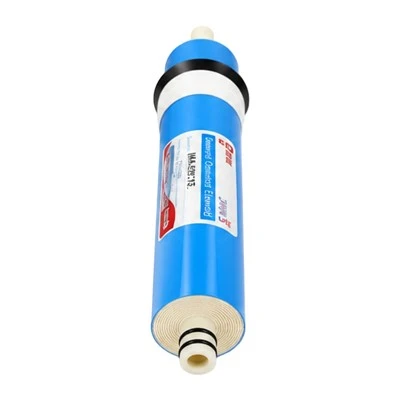
If you’ve been shopping around for commercial RO membranes lately, I know one question’s been bouncing around your head more than any other: “What the heck is the average cost here?” I get it—whether you’re a facility manager at a small manufacturing plant, someone setting up a new commercial car wash, or a pro at a water treatment company trying to budget for a big project, you don’t have time for vague, salesy lines that dance around the real numbers. As a commercial RO membrane supplier, I talk to people like you every single day, so I’m not gonna give you that generic “it depends” answer without breaking down exactly what those “depends” factors mean, and what you can actually expect to pay right now. Let’s dive in, no jargon, no fluff.
First off, let’s get one thing straight: commercial RO membranes aren’t the flimsy, cheap ones you see for under $20 on Amazon for your home under-sink system. Those are tiny, made for 50 GPD or less, and meant for light residential use. We’re talking about membranes built to handle commercial flow rates—think 100 GPD up to 10,000+ GPD, for systems that run 24/7, process hard water, industrial wastewater, food and beverage processing water, or even water for hospitals and labs. So right out the gate, the baseline is way higher, and that’s not a markup—that’s for durability, performance, and consistency when you can’t afford downtime.
Now, the average cost. If you’re ballparking for a standard, mid-range commercial RO membrane that fits in a standard 8-inch pressure vessel (the most common size for commercial systems, by far—most facilities use 8×40 or 8×21 configurations), you’re looking at a range of roughly $150 to $800 per membrane. Wait, I know that’s a big gap, so let’s split that down to explain why. A basic, entry-level membrane for small, low-demand commercial applications—like a 1,000 GPD system for a small coffee shop or a grocery store’s water cooler—might be on the lower end of that, around $150 to $300. These are solid, reliable, made for light to medium hard water, and they’ll last 2 to 3 years with proper maintenance, which is totally fine for smaller operations that don’t need to push 10 hours a day, every day.
On the other end, the $500 to $800 range is for heavy-duty, high-rejection membranes. If you’re running a 10,000 GPD system for a factory that produces cleaning chemicals, a food processing plant that needs water free of minerals to mix batter or package beverages, or a medical facility that requires ultrapure water for lab tests, you need these. They’re built to handle higher pressure, resist fouling from chemicals or debris, have a tighter rejection rate (so less mineral slip-through), and might last 3 to 5 years with the right care. I’ve got a client that runs a commercial bottling plant—they used to buy entry-level membranes, but had to replace them every 2 years because of constant calcium scaling, so switching to the higher-end ones saved them thousands in labor and replacement costs in the long run. That’s the thing about cost here: it’s not just the sticker price, it’s the total cost of ownership, which I’ll get to later.
Now, let’s talk about the factors that make that range. First, size. Not all commercial RO membranes are 8-inch. There are smaller 4-inch membranes, usually for smaller systems or skids that need more flexibility. A 4×40 commercial membrane will run you between $80 and $250, which makes sense—smaller membrane area means lower cost, but also lower flow rate. If your system is tiny, you might go that route, but 8-inch is still the workhorse for most commercial use. Then there are larger 10-inch or 12-inch membranes for ultra-high-flow applications, like municipal water treatment plants or big industrial sites—those can jump up to $1,200 or more per membrane, so you have to match size to your needs, not just grab the cheapest.
Next, membrane type and performance. We’re all familiar with the standard polyamide thin-film composite (TFC) membranes, right? That’s the most common type for commercial use, and the one I sell most of. But there are variations within TFC: high-rejection TFC, low-fouling TFC, high-pH resistant TFC, even ones made specifically for desalination if you’re near a coast. Each of these tweaks to the material and manufacturing process adds to the cost. For example, a regular TFC membrane that rejects 95% of salt will be cheaper than a high-rejection one that rejects 99.5%—perfect for food and beverage where even a tiny bit of sodium or magnesium can mess up a product. I had a craft brewery client a few months back that tried a cheap membrane, and their beer had a weird metallic taste from leftover minerals—they switched to the high-rejection one, and their product quality went up, plus they didn’t have to throw out as many batches. Worth every extra buck.
Then there’s the brand. I know, I know—everyone says “don’t pay for the name,” but when it comes to RO membranes, there’s a reason some names are more expensive. Top brands like Dow Filmtec, Hydranautics, and Toray have spent decades testing their membranes, refining their manufacturing, and standing behind their products. A membrane from one of those brands will cost you a bit more than a no-name off-brand from Alibaba, for example—usually $50 to $150 more for an 8-inch mid-range model. But here’s the catch: the off-brand ones often have lower rejection rates, shorter lifespans (1 to 2 years instead of 3), and a higher chance of fouling, which means you’re cleaning them more often, paying more for cleaning chemicals, and replacing them sooner. I had a guy reach out to me last year who bought 10 off-brand membranes to save $200 total—they all failed in 8 months, and he ended up spending $1,200 more on emergency replacements and a technician to fix his system than he would have spent buying good membranes in the first place. So brand matters a lot more here than it does for, say, a box of paper towels.
Application and operating conditions are another big one. If your water source is super hard, has high levels of iron, manganese, or other contaminants, you’ll need a membrane that’s resistant to fouling—those are more expensive. If your system runs 24/7, 365 days a year, the membrane is going to wear out faster than one that only runs 8 hours a day, 5 days a week, so you might want a more durable (and slightly pricier) model to avoid mid-night replacement calls. If you’re using the water for something that has strict regulatory requirements—like pharmaceutical manufacturing or drinking water for the public—you’ll need membranes that meet FDA or NSF standards, which also cost a bit more because they’re tested and certified to those rules. You can’t cut corners there, by the way—skipping certified membranes can get you in big trouble with health inspectors.
Wait, let’s also talk about total cost of ownership (TCO) vs. upfront cost, because that’s where a lot of people get tripped up. When I quote a client a membrane price, I don’t just give them the sticker— I break down what they’re actually going to spend over the lifespan of the membrane. Let’s take two 8×40 mid-range membranes: Membrane A is $200, lasts 2 years. Membrane B is $350, lasts 4 years. Over 4 years, Membrane A costs $400, plus you’ll have more downtime, more cleaning chemicals, maybe a few extra service calls. Membrane B costs $350, with almost no extra downtime or cleaning costs. That’s a $50 difference, but way less hassle. I’ve had so many clients come back to me after their first order, saying they wish they’d skipped the cheap ones and gone for the better option upfront. It’s like buying a car—you can get a cheap one that breaks down every year, or a reliable one that lasts a decade, and the reliable one is almost always cheaper in the long run.
Now, what about bulk pricing? A lot of facilities don’t just buy one membrane—they might replace all 6 or 8 in their system at once, or multiple systems across multiple locations. I work with a large retail chain that has 12 systems across their distribution centers, so when they replace membranes, they buy 50 at a time. That changes the price—bulk orders of commercial RO membranes can get you a 10% to 25% discount off the per-unit price, depending on how many you buy, and how often you order. I always remind people to factor bulk pricing in if they’re replacing multiple membranes at once, because it adds up fast.
Also, don’t forget to check for any extra costs. You can’t just buy the membrane itself and drop it in. You might need O-rings, adapter sleeves, cleaning chemicals for when you do maintenance, installation kits, or even a technician to come swap them out if you don’t have an in-house maintenance team. Those costs can add $50 to $200 per membrane, depending on what you need. I always include a line item for those when I quote, so there are no surprise fees down the line.
Wait, let’s answer the original question again, straight up, for anyone who just skims to the bottom: as of 2024, the average upfront cost for a standard 8×40 commercial RO membrane (the most common size) is between $250 and $450, with mid-range, reliable models landing right around $350. That’s after factoring in brand, standard performance, and for most commercial applications. The $150 to $800 range I mentioned earlier is the overall range for all sizes and types, but the average for what most people actually buy is that $250 to $450 sweet spot.
Now, let’s talk about how to make sure you’re getting the right price, not just the cheapest. First, do your homework on your water source. Get a water test done—hardness, TDS, contaminants, pH level. That tells you what kind of membrane you need, so a supplier can’t upsell you a high-end membrane when a mid-range one will work just fine. Second, ask about total lifespan and maintenance requirements, not just the per-membrane cost. A $300 membrane that lasts 4 years is way better than a $200 one that dies in 18 months, even if it’s a bit pricier upfront. Third, work with a supplier who actually knows their stuff— not a generic online store that sells every type of RO membrane, but someone who specializes in commercial ones, because they can help you match the membrane to your exact needs, not push whatever is easiest for them.
Which brings me to you. If you’re trying to figure out exactly what membrane you need, and what it’ll cost for your specific system, don’t guess. Send over your system specs, your water source details, what you’re using the product water for, and I can put together a no-obligation quote, break down the average cost for your situation, and even give you tips on extending your membrane’s lifespan to get the most out of your investment. No pressure, no sales pitch, just straight answers.
At the end of the day, commercial RO membrane cost isn’t just a number on a price tag—it’s an investment in your system’s performance, your product quality, and avoiding costly downtime. You don’t have to overpay, and you definitely don’t want to underpay and end up with a membrane that doesn’t do what you need it to. If you’re ready to chat through your needs and get a clear, transparent quote, reach out anytime. We’ll make sure you get exactly what you need at a fair price, no hidden fees, no fine print.
Hot Water RO Membrane References:
- Water Quality & Health Council. (2023). Commercial Reverse Osmosis Membrane Performance and Cost Benchmark Report.
- Hydranautics. (2024). RO Membrane Specification and Pricing Guide for Commercial Applications.
- American Water Works Association. (2023). Total Cost of Ownership for Commercial Membrane Water Treatment Systems.
Huamo Group
Fujian Huamo Technology Co., Ltd. is one of the most professional commercial ro membrane manufacturers and suppliers in China, featured by quality products and good service. Please rest assured to wholesale the best commercial ro membrane made in China here and get price list from our factory. Contact us for custom service and OEM service.
Address: No.6 Hengtong Rd, Shanmei Village, Xiamei Town, Nanan City, Fujian Province, China
E-mail: info@huaromembrane.com
WebSite: https://www.hmromembrane.com/
