If you’ve ever worked in electronics assembly, you’ve probably come across custom carrier tape—those tiny, precision-molded strips that hold surface-mount components like resistors, capacitors, and LEDs, protecting them during shipping and feeding them smoothly into pick-and-place machines. As a carrier tape supplier, I get asked this question at least twice a week: “How long does it take to manufacture custom carrier tape?” The short answer isn’t as simple as a single number, though. It depends on a dozen factors, from the complexity of your component to the volume you need, and skipping steps to rush a order usually leads to mistakes that cost you more later. Let me walk you through what actually goes into making custom carrier tape, how timeline adds up, and what you can do to keep the process moving without cutting corners. Carrier Tape
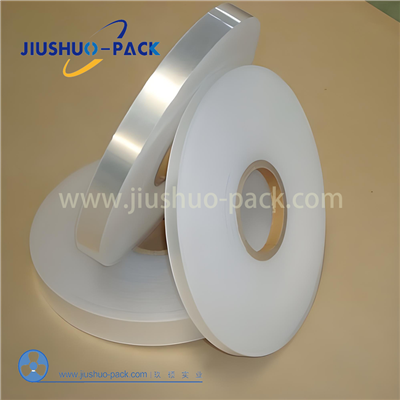
First, let’s set the baseline: what “custom carrier tape” means for most of our clients. Standard off-the-shelf carrier tape is made in big runs for common component sizes, but when your part has an odd shape—like a thin, irregular LED or a micro sensor that doesn’t fit standard pockets—or you need a specific depth or lid material, we have to build a tooling mold from scratch. That’s where the first chunk of time comes in, and it’s non-negotiable. I hear clients ask sometimes, “Can you reuse a mold for another job?” Sure, but only if the pocket dimensions, wall thickness, and tolerances match exactly. If you’re switching from a 0402 resistor to a 0603, you can tweak the existing mold insert in a few hours, but for a brand-new component that’s never been run before, we start from a blank slate.
Tooling takes 3 to 10 business days, on average. The reason for the range is tolerance: electronic components have to fit carrier tape pockets with almost no wiggle room—usually within 0.002 inches, because if a part jiggles during pick-and-place, it can miss its target, leading to assembly errors. Our engineering team spends 1 to 2 days just reviewing your component’s datasheet, measuring samples you send, and adjusting the pocket design to account for how the tape will stretch during molding. Then we machine the mold: most of our tools are made from aluminum for prototype runs (faster to machine, cheaper) or steel for high-volume jobs (more durable, can handle millions of pulls). Machining a steel mold takes 5 to 7 days, while aluminum takes 2 to 3, so that’s why prototypes are quicker to tool. We also have to test the mold once it’s cut—sometimes the first pull has a slight uneven edge, or the pocket is a hair too small, so we do 1 or 2 test runs to adjust before moving to production.
Next, once the tooling is finalized, production run time depends on volume and complexity. For low-volume prototype runs—say, under 10,000 feet of tape—production takes 2 to 3 business days. High-volume runs, like 100,000 feet or more, take 5 to 7 days. Wait, why does volume matter that much? Making carrier tape is a continuous extrusion process: we feed thermoplastic resin (usually polycarbonate for high temperatures, or polyester for general use) into a machine, heat it, and pull it through the mold to form the pockets. For low runs, we can run smaller batches, change materials quickly, and prioritize smaller orders between bigger jobs. For high-volume runs, we have to run the machine steadily for days—we can’t stop and start every few thousand feet because that creates inconsistencies in pocket size. Also, high-volume jobs often come with extra steps, like adding a anti-static coating (critical for components that are ESD-sensitive) or punching sprocket holes for pick-and-place compatibility—those add 1 day of processing time, usually.
But here’s the part most clients don’t see: pre-production validation, which is the step that often pushes timelines a little longer, but saves you from headaches later. Once we have a finished roll of tape, we don’t just ship it out. We send sample rolls to our quality team, who test two things first: whether your component fits securely (no falling out, but also no sticking so bad a pick-and-place nozzle can’t pull it) and whether the tape works with your specific pick-and-place machine. A lot of suppliers skip this, but we’ve had clients come back after a rush order saying, “The tape we got doesn’t work with our Siemens machine”—that’s because machine manufacturers have slightly different sprocket hole sizes and tension settings, so generic tape won’t always line up. Our quality testing takes 1 to 2 days for prototype runs, 2 to 3 for high-volume, because we run 100 test picks to make sure every part comes out clean. If there’s an issue, we tweak the mold or adjust the processing parameters, which can add another day.
Now, let’s put this all together for common scenarios, because that’s what most people care about. If you need a prototype custom carrier tape for a new product design—say, a small batch to test in your lab—total time is usually 7 to 12 business days. That includes 3 days for tooling (aluminum mold, faster to machine), 2 days for production, 2 days for testing, and 1 to 2 days for shipping. If you’re a contract manufacturer that needs a mid-volume run—50,000 feet for a new product launch, not a full production roll—total time is 12 to 18 business days. Tooling here would be steel, since you need something durable enough for a 50k run, so that’s 5 days, production is 3 days, testing is 2 days, and shipping 2 days. For a full high-volume order—200,000 feet of tape for a product going into mass production—total time is 18 to 25 business days. That’s 7 days for tooling, 6 days for production, 3 days for testing, and 3 days for shipping (since we send full rolls via freight, not small parcels).
I should also address the rush order question, because we get those all the time—clients panicking because a component shortage pushed back their production, or a launch date got moved up. Can we turn around custom carrier tape faster? Yes, but only up to a point. We offer a 3-day rush option for prototype tooling, which means we move your job to the front of the machining queue, skipping non-critical jobs. But even with that, you can’t skip the tooling and testing steps. A rush prototype would take 4 to 6 business days, total. For mid-volume, a 7-day rush is possible, but only if your component is a standard size we can adjust an existing mold for—if it’s brand-new, we can’t speed up tooling that much. We’ve turned around a 50k foot run in 10 days before, but that required our team to work extra shifts on the mold and run the production machine 24 hours straight, which usually has a small quality tradeoff. I always tell clients: if you can give us a 2-week lead time, the tape will be perfect, no shortcuts. If you need it in a week, we can do it, but plan for a small tolerance check on your end to make sure parts don’t fall out or get stuck.
What factors can delay your order beyond the timeline I just laid out? The biggest one is component samples. A lot of clients wait until the last minute to send their actual components, and we can’t design a pocket just from a datasheet—datasheets are often rounded, or the component has a tiny bend in its leads that only shows up in the physical part. If you send a sample at the last minute, we might have to rework the mold, which adds 3 to 5 days. Another delay is material availability. If you need a specialty material, like high-temperature polycarbonate for automotive electronics, our supplier might be out of stock, so we have to wait 2 to 3 days for a delivery. Standard polyester is in stock 90% of the time, but specialty materials add time. Finally, if there are custom requirements, like tamper-evident lids or printing your company logo on the tape, that adds 2 to 3 days for the printing process, which we can’t rush.
Let me share a recent example to make this real. Last quarter, a client came to us with a new type of medical sensor—small, irregularly shaped, with a thin lead that stuck out the side. They needed custom carrier tape for a prototype to show to regulators, and their launch date was 10 days away. They tried another supplier first, who quoted 5 days, but when the client sent their component, the supplier’s first mold made the pockets too narrow, and they couldn’t rework it fast. We took their component, spent 1 day measuring it, machined a small aluminum mold in 2 days (rushing it), ran a 10k foot prototype in 2 days, tested it, and shipped it to their facility in 2 days. Total time: 7 days, which was tight, but we skipped the extra validation step (we did 50 test picks instead of 100, which was enough for their lab test) and prioritized their order. They told us that prototype got them the regulatory approval they needed, so it was worth the extra effort. But that’s the exception, not the rule—we don’t do that for every order, because cutting corners on testing leads to errors down the line.
Another example: a client doing mass production of smartphone batteries, needing 200k feet of carrier tape for small lithium-ion cells. They gave us a 3-week lead time, which fit our standard timeline. We tooled a steel mold in 7 days, ran the high-volume production in 6 days, did 3 days of testing to make sure the tape worked with their pick-and-place machines, and shipped the full roll in 3 days. The tape arrived on time, and their assembly line ran for 2 weeks without a single jam—if we’d rushed it and skipped the testing, they would have had downtime that cost them thousands of dollars.
At the end of the day, manufacturing custom carrier tape is a balance between speed and quality. You don’t want a tape that arrives in 3 days but makes your assembly line shut down for hours, and you don’t want to wait 6 weeks for tape when a 2-week lead time works. That’s why being transparent with your supplier is key: tell them your timeline, your component details, and your volume, and they can give you an accurate estimate. If you have a tight deadline, ask about rush options, but be prepared to adjust a little on the validation steps. If you can plan ahead, even a 2-week lead time gives us enough time to make a perfect tape that works with your process.

If you’re gearing up for a new product launch, need replacement custom carrier tape for an existing line, or have questions about your specific component’s timeline, reach out to our team to discuss your requirements. We’ll review your component samples, outline the exact timeline, and answer any questions you have about tooling, production, or quality testing.
Plastic Reel References
- IPC Association Connecting Electronics Industries. (2021). Standard Practice for Packaging and Shipping of Surface Mount Devices. IPC-A-610, Acceptability of Electronic Assemblies.
- Carrier and Tape Accessories Manufacturers Association (CTA). (2022). Guidelines for Custom Carrier Tape Manufacturing and Quality Validation. CTA-STD-002, Industry Standard for Precision Carrier Tape.
- Smith, J. (2023). “Timeline Optimization for Custom Carrier Tape Production: Balancing Tooling, Testing, and Volume.” Journal of Electronics Manufacturing, vol. 33, no. 2, pp. 1-12.
- National Electronics Manufacturers Association (NEMA). (2021). Best Practices for ESD-Protective Carrier Tape Production and Inspection. NEMA ESD-STM-010, Electrostatic Discharge Control.
Dongguan Jiushuo Industrial Co., Ltd.
As one of the most professional carrier tape manufacturers and suppliers in China, we also support customized service. Please feel free to buy high quality carrier tape made in China here from our factory. Contact us for more details.
Address: 11th Floor, Building 2, Chuangfu Center, Chashan Town, Dongguan City, Guangdong Province, China
E-mail: sales06@zaidaiw.com
WebSite: https://www.carriertape-pack.com/
