As a supplier of automotive brushless motors, I’ve witnessed firsthand the critical role these motors play in modern vehicles. One of the most challenging environments for automotive components is the high – temperature setting. In this blog, I’ll delve into the performance of automotive brushless motors in high – temperature environments, sharing insights based on our experiences and industry knowledge. Automotive Brushless Motor
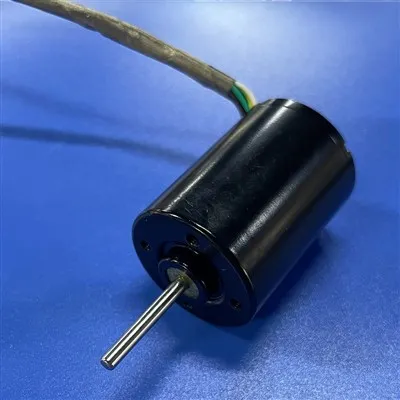
Understanding the Basics of Automotive Brushless Motors
Before we discuss their performance in high – temperature environments, let’s briefly understand what automotive brushless motors are. Unlike traditional brushed motors, brushless motors operate without physical brushes. They use electronic commutation, which offers several advantages such as higher efficiency, longer lifespan, and better speed control. These motors are widely used in various automotive applications, including electric power steering, cooling fans, and fuel pumps.
Impact of High Temperatures on Motor Components
Stator and Windings
The stator and windings are crucial parts of an automotive brushless motor. High temperatures can have a significant impact on them. As the temperature rises, the resistance of the copper windings increases. According to the temperature coefficient of resistance for copper, a typical value is around 0.00393 per degree Celsius. This increase in resistance leads to higher power losses in the form of heat. For example, if a motor is operating at a normal temperature of 25°C and the temperature rises to 100°C, the resistance of the windings can increase by approximately 30%. This additional heat generation can further raise the temperature, creating a vicious cycle.
Moreover, high temperatures can cause the insulation of the windings to degrade. The insulation materials used in motor windings are designed to withstand a certain temperature range. When exposed to high temperatures for an extended period, the insulation can become brittle, crack, or even melt. This can lead to short – circuits between the windings, which not only reduces the motor’s performance but can also cause permanent damage.
Magnets
Permanent magnets are another critical component of brushless motors. Most automotive brushless motors use rare – earth magnets, such as neodymium – iron – boron (NdFeB) magnets, due to their high magnetic strength. However, these magnets are sensitive to high temperatures. As the temperature increases, the magnetic properties of NdFeB magnets start to degrade. The Curie temperature of NdFeB magnets is typically around 310 – 340°C. As the temperature approaches this value, the magnets lose their magnetization, which directly affects the motor’s torque and power output.
In addition, high temperatures can cause thermal stress on the magnets. The expansion and contraction of the magnet material due to temperature changes can lead to mechanical stress, which may cause the magnets to crack or break. This can result in an imbalance in the motor’s magnetic field, leading to vibration, noise, and reduced efficiency.
Electronic Control Unit (ECU)
The ECU is responsible for controlling the operation of the brushless motor. It consists of various electronic components, such as microcontrollers, power transistors, and capacitors. High temperatures can have a detrimental effect on these components. Electronic components have a specified operating temperature range, and exceeding this range can cause them to malfunction.
For example, power transistors are used to switch the current in the motor windings. High temperatures can increase the on – resistance of these transistors, leading to higher power losses and reduced efficiency. Capacitors can also be affected by high temperatures. The capacitance value of a capacitor can change with temperature, which can affect the stability of the ECU’s power supply and control circuits.
Performance Metrics Affected by High Temperatures
Efficiency
As mentioned earlier, high temperatures increase the resistance of the windings and the on – resistance of power transistors in the ECU. This leads to higher power losses in the form of heat, reducing the overall efficiency of the motor. A decrease in efficiency means that more electrical energy is converted into heat rather than mechanical work. This not only wastes energy but also increases the operating cost of the vehicle.
Torque and Power Output
The degradation of the magnets’ magnetic properties at high temperatures directly affects the motor’s torque and power output. As the magnets lose their magnetization, the magnetic field strength in the motor decreases. This results in a reduction in the torque generated by the motor, which can affect the vehicle’s acceleration and performance. In addition, the power output of the motor is also reduced, as power is directly proportional to torque and speed.
Reliability and Lifespan
High temperatures can significantly reduce the reliability and lifespan of automotive brushless motors. The degradation of the insulation, magnets, and electronic components can lead to premature failure of the motor. For example, short – circuits in the windings or malfunctioning of the ECU can cause the motor to stop working. This not only requires costly repairs but also affects the safety and reliability of the vehicle.
Strategies to Improve Performance in High – Temperature Environments
Thermal Management
Effective thermal management is crucial for improving the performance of automotive brushless motors in high – temperature environments. One common approach is to use heat sinks. Heat sinks are made of materials with high thermal conductivity, such as aluminum or copper. They are attached to the motor’s components, such as the stator and the ECU, to dissipate heat more efficiently.
Another strategy is to use liquid cooling systems. Liquid cooling can provide more effective heat transfer compared to air cooling. In a liquid cooling system, a coolant is circulated around the motor to absorb heat and carry it away. This can help maintain the motor’s temperature within a safe range, even in high – temperature environments.
High – Temperature – Resistant Materials
Using high – temperature – resistant materials can also improve the performance of automotive brushless motors. For the windings, high – temperature insulation materials can be used to prevent degradation at high temperatures. For the magnets, special coatings or alloys can be used to improve their temperature stability. In addition, the electronic components in the ECU can be selected to have a higher operating temperature range.
Optimized Design
An optimized motor design can also help improve performance in high – temperature environments. For example, the motor’s geometry can be designed to allow for better air circulation, which can help dissipate heat more effectively. The winding configuration can also be optimized to reduce the resistance and power losses at high temperatures.
Real – World Applications and Case Studies
In real – world automotive applications, the performance of brushless motors in high – temperature environments is crucial. For example, in electric vehicles, the cooling fans are often required to operate in high – temperature engine compartments. If the brushless motors used in these fans cannot perform well in high – temperature environments, the cooling system may fail, leading to overheating of the engine.
We have worked with several automotive manufacturers to address the high – temperature performance issues of our brushless motors. In one case, a manufacturer was experiencing problems with the brushless motors in their electric power steering systems. The motors were failing prematurely due to high temperatures in the engine compartment. We worked with them to implement a liquid cooling system and use high – temperature – resistant insulation materials for the windings. As a result, the reliability and performance of the motors improved significantly, and the failure rate was reduced.
Conclusion

In conclusion, high – temperature environments pose significant challenges to the performance of automotive brushless motors. The stator and windings, magnets, and ECU are all affected by high temperatures, which can lead to reduced efficiency, torque, and power output, as well as decreased reliability and lifespan. However, through effective thermal management, the use of high – temperature – resistant materials, and optimized design, we can improve the performance of these motors in high – temperature environments.
Brushless Dc Motor As a supplier of automotive brushless motors, we are committed to providing high – quality products that can perform well in various environments, including high – temperature settings. If you are an automotive manufacturer or a procurement professional looking for reliable brushless motors, we would be more than happy to discuss your requirements and provide you with the best solutions. Contact us to start a procurement discussion and explore how our motors can meet your needs.
References
- "Electric Motors and Drives: Fundamentals, Types and Applications" by Austin Hughes and Bill Drury.
- "Handbook of Automotive Power Electronics and Motor Drives" edited by Ali Emadi.
- Technical reports from major automotive component manufacturers on brushless motor performance in high – temperature environments.
Shenzhen HengDrive Technologies Co., Ltd.
Shenzhen HengDrive Technologies Co., Ltd. is one of the most professional automotive brushless motor manufacturers and suppliers in China, specialized in providing high quality customized service. We warmly welcome you to buy the newest automotive brushless motor in stock here from our factory.
Address: Building A & F, FuNing Hi-Tech Park, XinTian Road, FuHai Street, BaoAn District, ShenZhen, GuangDong Province, China.
E-mail: Marketing001@hengdrive.com
WebSite: https://www.hengdrivemotor.com/
