If you’ve ever wandered down the industrial control aisle, you’ve definitely seen a time relay—those little, unassuming devices that make machines pause, switch on, or shut off on a schedule. As someone who’s been selling time relays for over 10 years, I get so many questions about their price range. It’s not a one-size-fits-all number, and that’s actually a good thing, because time relays are built for every kind of job, from a tiny coffee maker to a massive factory assembly line. Let’s break down what actually determines the price, and what you can expect to pay depending on what you need. Time Relay
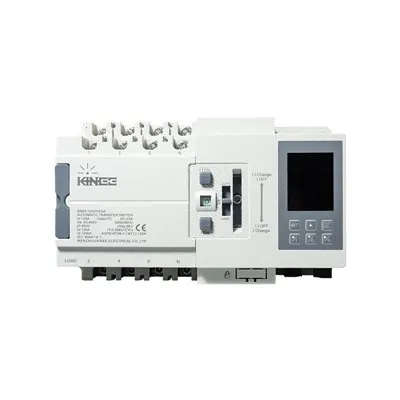
First, let’s start with the basics: what even is a time relay, for anyone who’s new to this? At its core, it’s an electrical switch that uses time as its trigger. Instead of flipping on when it detects voltage or pressing a button, it waits a set amount of time—could be a fraction of a second, could be weeks or months—before activating (or deactivating) another circuit. They’re used everywhere: HVAC systems that delay turning on fans after the compressor, traffic lights that hold a green light for cross traffic, commercial washing machines that fill and drain on a timer, even the lights in your office that turn off automatically when no one’s moving. No fancy tech, just reliable timekeeping for tons of industries.
Now, onto the price stuff. This is where most people get tripped up. A lot of first-time buyers think “it’s just a relay, how expensive can it be?” but the answer is, it depends on a ton of factors. Let’s start with the entry-level stuff—these are the ones you’ll find at a hardware store or on Amazon, for super simple, low-stakes jobs. The tiny plug-in ones, like the ones that control a small pond pump or a decorative holiday light string? Those run anywhere from $5 to $25. I’m talking plastic cases, basic quartz timers that aren’t built for heavy use, max time spans of maybe 24 hours, and no fancy features. These are great for small residential projects or light commercial stuff that doesn’t get run 24/7, but don’t expect them to hold up in a factory. I once had a customer come to me upset because he’d bought one of these $10 ones for his warehouse loading dock lights—they fried in two months because the constant vibration and temperature swings were way beyond what that relay was designed for. Lesson there: buy for your environment, not just the cheap price tag.
Next up is the mid-range category, which is where most of our clients fall. These are the time relays built for industrial or high-use commercial applications. Think assembly lines, HVAC systems for office buildings, conveyor belts, or restaurant kitchen equipment (like commercial dishwashers that need timed cycles). The price here is between $30 and $150, depending on the specs. What makes these different from the cheap ones? First, build quality. They’re usually metal-cased, so they can handle vibration, dust, and extreme temperatures (think -40°F to 140°F, vs the $10 ones that crap out below 32°F). They have more flexible time ranges—entry-level might max out at 24 hours, mid-range can go from 0.1 seconds up to days or even weeks, which is perfect for things like curing concrete or seasonal equipment that only runs a few times a year. They also have more control options: you can set them to repeat cycles, trigger multiple outputs at different times, adjust for voltage fluctuations, and some even have LCD displays to make programming way easier than messing with tiny dials. We sell a ton of these mid-range units to small manufacturing shops, and they almost always last 5+ years, even with daily 12-hour use. A local print shop I work with has one that’s been running their sheet feeder on a timed cycle for 7 years now—still going strong, no issues.
Then there’s the high-end, heavy-duty time relays for the big players. These are the ones used in power plants, large-scale water treatment facilities, mining operations, or any place where a relay failing could cost thousands (or millions) in downtime. We’re talking $150 all the way up to $1,200+ for these. What justifies that price? First, certifications. These have to meet strict industrial standards—UL, CE, CSA, sometimes even military specs for extreme environments like space or offshore drilling. They have redundant systems, so if one timer component fails, another kicks in automatically, no downtime. They can handle massive voltage loads (up to 480V, vs mid-range that’s usually 240V max) and connect to industrial control systems like PLCs, so you can monitor and adjust the timer remotely from a central office. Some even have data logging, so you can track how often it’s activating, troubleshoot issues before they become problems, or generate reports for compliance. I had a client at a municipal water treatment plant buy a set of these last year—they’d been having issues with mid-range relays failing during peak summer demand, which messed up their chlorine dosing cycles. The high-end ones have held up through 100°F heat and 24/7 use, and they can connect to their SCADA system so operators don’t have to climb up to the tank to adjust timers during shifts. That peace of mind is worth every penny when you’re not losing $10k an hour because of a broken relay.
Wait, but let’s talk about other factors that can shift the price, even within these ranges. One big one is the time range and accuracy. If you need a relay that’s accurate to within a millisecond (for things like timing camera flashes or high-speed packaging lines), you’ll pay more than one that’s only accurate to a second, which is fine for lighting. If you need a time span longer than, say, 30 days, that adds to the cost too—those long-cycle timers have to account for things like daylight saving time or power outages, which require extra circuitry. Another factor is output type: some relays have dry contacts, which mean you can use them for any circuit, while others are built specifically for AC or DC power, which limits their use but might be cheaper for that exact application. Also, quantity, obviously—if you’re buying one relay for your home, you’ll pay retail, but if you’re buying 100 for a manufacturing plant, we can negotiate a bulk rate that’s way lower than individual pricing, sometimes cutting 20-30% off the per-unit cost.
I should also mention that there’s a lot of garbage time relays out there, especially on places like Alibaba or random discount sites. A lot of these knockoffs look identical to the mid-range units, but they’re built with cheap parts that fail fast. I once had a factory send back 50 cheap relays they’d bought online—all of them failed within 3 months, and when we tested them, the timers were off by 10% or more, which was enough to mess up their production schedule. The $40 knockoff ended up costing them more in downtime than a $60 quality mid-range unit would have. That’s a big mistake a lot of people make: chasing the lowest price without thinking about total cost of ownership. A $10 relay that lasts 2 months is way more expensive per year than a $50 relay that lasts 5 years.
What about when power outages happen? That’s another factor. If your relay has to keep track of time when the power cuts out, you need a backup battery or supercapacitor. Those add $10-$50 to the price, depending on how long the backup needs to last. For example, a relay that’s supposed to run a farm irrigation system that only gets power during the day needs a backup that lasts a week, while a relay for a hospital emergency system needs a backup that lasts days or weeks.
Let me put this all in perspective for different use cases, so you can match your needs to the right price. If you’re a homeowner needing a timer for your porch light or a small garden pump? Stick to the $5-$25 entry-level units, just make sure it’s rated for outdoor use if that’s where you’re putting it. If you’re a small business owner needing timers for your store’s opening and closing lights, your pizza oven’s cycle times, or your office HVAC? $30-$150 mid-range is perfect, they’re reliable, easy to program, and won’t break the bank. If you’re running a large operation—factory, municipal facility, construction site where downtime is costly? The $150+ high-end units are worth every cent for the reliability and extra features.
Now, as a time relay supplier, I’ve helped hundreds of people pick the right relay for their needs, and I get that this can feel overwhelming. There are so many options, and it’s hard to tell what’s actually a good deal vs what’s overpriced. That’s why we don’t just sell relays—we help our customers figure out exactly what they need, so they don’t waste money on features they’ll never use, or cut corners that lead to headaches later. Whether you need one relay for a home project, 50 for a local shop, or 500 for a large industrial site, we can walk you through the options, answer all your questions, and give you a fair price that fits your budget and your needs.

If you’re tired of dealing with relays that fail at the worst time, or you’re just not sure which range is right for your project, reach out to us to connect about your requirements. We’ll break down the pros and cons of each option, give you a transparent price quote, and make sure you get a relay that works for your specific application, not a one-size-fits-all unit that doesn’t cut it.
Photoelectric Sensor References:
- International Electrotechnical Commission. (2021). IEC 61812-1: Time relays for industrial and residential use – Part 1: Requirements and tests.
- National Electrical Manufacturers Association. (2022). Industrial Control Relay Performance and Cost Analysis.
- U.S. Department of Energy. (2023). Commercial and Industrial Timer Equipment Efficiency Guide.
Wenzhou Kinee Electrical Co., Ltd.
We are one of the most professional time relay manufacturers and suppliers in China, featured by quality products and good price. Please rest assured to buy advanced time relay made in China here from our factory. We also accept customized orders.
Address: Unit 1, Building 31, Wenzhou Wenbo Science and Technology Industrial Park, No. 706 Yanyun Road, Lingkun Street, Oujiangkou Industrial Cluster Area, Wenzhou, Zhejiang Province
E-mail: sandyma@kinee.net
WebSite: https://www.kinee.net/
