If you’ve ever spent time in a commercial building, server room, or even a large kitchen, chances are you’ve interacted with an EC axial fan without even noticing it. I’m the owner of a company that supplies these fans, and I get questions all the time from clients—from HVAC techs upgrading old systems to business owners trying to cut energy costs—asking, “What’s the big deal about EC axial fans, anyway?” The short answer is: way more efficient, quieter, and smarter than the old AC fans you probably grew up with. But let’s break down how they actually work, because that’s where the magic (and the value) really is. EC Axial Fan
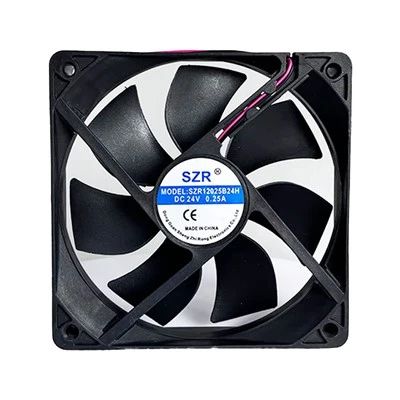
First, let’s start with the basics for anyone who’s not a HVAC geek. Axial fans are the ones that move air parallel to the fan’s axis—like the fans in a laptop or a box fan you use on a hot day, right? They blow air straight through, not around corners, so they’re perfect for moving large volumes of air over short distances. Now, EC stands for Electronically Commutated, which is the key difference between these fans and the AC axial fans most people know. Old AC fans run on alternating current, same as your wall outlets, and their speed is tied directly to the frequency of that AC power. If you want to slow them down, you have to use something like a big resistor (that wastes energy) or a belt drive (bulky, noisy, and prone to breaking). EC fans, on the other hand, use DC power but they convert that AC input to high-efficiency DC internally, using a tiny, smart motor controller. That’s the core of how they work, but let’s dig a little deeper.
Let’s talk about the motor itself. Most AC axial fans use induction motors—super simple, but inefficient at partial speeds. Induction motors have a stator (the stationary part with copper windings) and a rotor (the spinning part, which gets a magnetic field from the stator’s alternating current). The problem is, induction motors can’t match their speed to the actual air demand. If your building only needs 50% air flow at night, an AC fan has to either waste half its energy spinning at full speed or clunky hardware to slow it down. EC motors are brushless DC motors, which is a big upgrade. Brushless means no brushes (the little carbon pieces that rub against old motor rotors to transfer power)—brushes wear out, create friction, and waste energy. By getting rid of them, EC motors cut down on maintenance and lose way less energy to heat.
Now, the “electronically commutated” part is the secret sauce here. Commutation is the process of switching the current to the stator windings at the exact right time to keep the rotor spinning smoothly. In old DC motors, that’s done mechanically with those brushes, which is messy. For EC motors, it’s done electronically—no moving parts, just a tiny circuit board that reads the position of the rotor (usually with sensors like Hall effect sensors, which are super cheap and reliable) and adjusts the current to the stator on the fly. That means the motor can adjust its speed almost instantly, with pinpoint accuracy, based on whatever signal you give it.
Wait, what signals? That’s where EC fans get even smarter. Most EC axial fans can hook up to a building’s BMS (Building Management System) or just a basic thermostat, and they’ll adjust their speed automatically. For example, if a server room’s temperature rises from 72°F to 75°F, the fan can speed up a little to blow more cool air. If it drops back to 71°F, it slows down. AC fans can’t do that without extra expensive add-ons. Let me give you a real example: a restaurant kitchen I supplied last year had AC axial fans that ran full blast 24/7, even at 2 a.m. when there was barely any cooking happening. After we swapped them out for EC axial fans, they used 40% less electricity, and the noise dropped so much the line cooks actually stopped complaining about the constant hum. That’s not a sales pitch—that’s what happens when you let the fan do the work instead of forcing it to run at full speed all the time.
Let’s get a little technical, but keep it simple. When you plug an EC axial fan into a standard 120V or 240V AC outlet, the built-in power supply converts that AC to smooth DC (direct current) instead of the choppy, alternating current your outlet sends. That DC goes to the stator windings on the motor, and the electronic controller switches the current in each winding in the perfect sequence to create a rotating magnetic field that pulls the rotor around. The rotor has permanent magnets, too—unlike induction motors, which have electromagnets on the rotor, permanent magnets mean the motor doesn’t have to waste energy magnetizing the rotor. That’s why EC motors are so much more efficient: they can turn up to 90% of the electrical energy they use into moving air, while AC induction axial fans are usually only 60-70% efficient, especially at low speeds.
Another big thing: EC axial fans can handle more variable loads without sacrificing performance. If you’re using them for industrial ventilation, where air flow changes a lot throughout the day, they’re way more flexible than AC fans. Let’s say you’re a warehouse owner: during the day, you have workers moving boxes, so you need more air to remove fumes and keep people comfortable. At night, the warehouse is empty, so you just need enough air to keep air from getting stale. An EC fan will dial its speed down automatically, using way less power, whereas an AC fan would still run at full speed, or you’d have to manually adjust a belt drive, which is a hassle (and you might forget, leading to wasted energy).
Wait, I know what some of you are thinking: “EC fans must be way more expensive upfront?” Yeah, a little at first. But let’s do the math. A standard AC axial fan costs maybe $100, while an EC version is around $150. But over the lifespan of the fan (usually 5-10 years), the energy savings add up fast. Let’s say a fan runs 8,000 hours a year, uses 100W. An AC fan would use 800 kWh a year, costing about $100 (assuming 12.5 cents per kWh). An EC fan would use 500 kWh a year, saving $37.50 a year. That’s $187.50 in savings in just 5 years, which is more than the extra cost of the fan. And don’t forget maintenance: EC fans have no brushes to replace, no belts to tighten, so you’ll save on service calls too. That’s the real value, not just the upfront price.
Now, let’s talk about common myths I hear all the time. First myth: “EC fans are only for big commercial spaces.” No way! I’ve supplied EC axial fans to small retail shops, home gyms, even DIYers building a server closet in their garage. If you need to move air efficiently, regardless of the size, they work. Second myth: “They’re too complicated to install.” Nah, most are plug-and-play, same as an AC fan. You just hook up the power, and if you want the speed control, you can connect a basic thermostat or BMS, but you don’t have to. Even the basic models, without smart controls, are way more efficient than AC fans. Third myth: “They break easier because of the electronics.” No, those circuit boards are sealed, so they’re resistant to dust and moisture, which is perfect for kitchens, warehouses, or outdoor applications. I’ve had fans I installed 8 years ago still running strong, no issues with the electronics.
So why do I care so much about explaining this? Because I’ve been in this business for over a decade, and I’ve seen way too many clients waste money on old AC fans when they could be saving thousands on energy costs. A lot of suppliers will just say “EC fans are better” without explaining why, but I think it’s important to get the details right. When you understand how they work, you can see why they’re not just a trend—they’re a long-term solution that saves you money and is better for the environment, too. Because less energy use means lower carbon emissions, which matters for everyone.
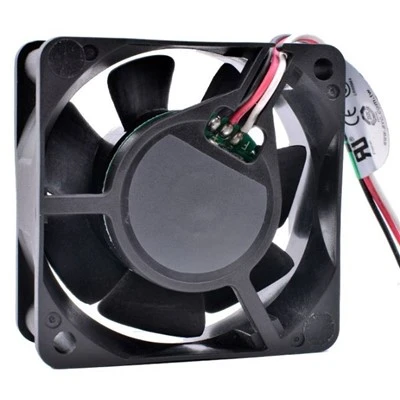
If you’re still on the fence, maybe you have an old system that’s costing you too much to run, or you’re building a new space and want to make it as efficient as possible. I’ve helped tons of clients customize the right EC axial fan for their needs—whether that’s a high-volume fan for a factory, a quiet one for a office, or a corrosion-resistant one for a food processing plant. We can walk through what you need, answer any questions, and get you a quote that makes sense. Don’t just take my word for it, either—we’ve got references from clients who cut their energy bills by 40% or more after switching.
Electronics Cooling Fan References
- ASHRAE. (2021). HVAC Applications Handbook: Fans and Air Distribution. American Society of Heating, Refrigerating and Air-Conditioning Engineers.
- IEEE. (2019). "Electronically Commutated Motors: Fundamentals and Applications." Transactions on Industrial Electronics.
- U.S. Department of Energy. (2020). Energy Efficiency and Renewable Energy: Commercial Fans and Blowers.
- Air Movement and Control Association International. (2022). Axial Fan Performance Standards and Efficiency Ratings.
Dongguan Shengzhirong Electronics Co., Ltd.
As one of the most professional ec axial fan manufacturers and suppliers in China, our products have good reputation in the market. Please rest assured to wholesale high quality ec axial fan made in China here from our factory. Customized orders are welcome.
Address: 6/F, Building 2, No.68, Shunxing 2nd Road, Dajingtou 2nd Industrial Zone, Dalang Town, Dongguan City, Guangdong, China
E-mail: szr_coolingfan@163.com
WebSite: https://www.szrfan.com/
