Hey everyone, let’s cut to the chase—if you’ve ever worked in manufacturing, metal fabrication, or even aerospace parts making, you’ve probably dealt with cutters that feel like they don’t stand a chance against tough materials. That’s where a carbide threaded cutter comes in, and as someone who’s been supplying these bad boys for years, I’m gonna break this down like I would with a new shop tech who just asked me “what even is that?” Threaded Cutter
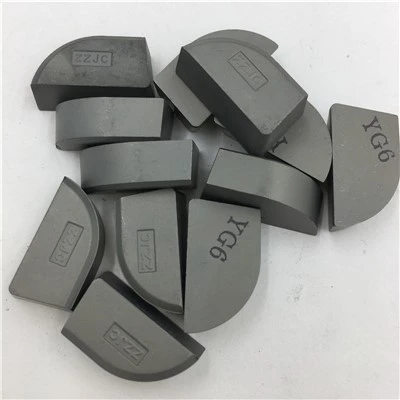
First off, let’s get the basics right: a carbide threaded cutter isn’t just some fancy upgrade over your basic high-speed steel (HSS) cutter. It’s a tool made from two core stuffs—tungsten carbide (the super hard, heat-resistant stuff) and a binder, usually cobalt, that holds it all together. Way back when I first started in this biz, HSS was king for threading, but guys kept burning out tools on stainless steel, titanium, or Inconel (those aerospace-grade alloys that basically act like metal armor). Carbide changed that ‘cause it can handle way higher temps without dulling, and it lasts 10x longer than HSS cutters in most tough threading jobs.
Wait, let’s make that clear: threading is different from regular milling, right? When you thread a part, you’re carving those precise helical grooves that make a bolt fit tight into a nut, or a pipe joint seal up. A carbide threaded cutter’s geometry is specific—its teeth are shaped exactly to cut that thread form (ISO, UNC, metric, whatever you need) without slipping or chattering. Unlike taps, which are also for internal threads, these are often for external threads, or sometimes internal too, depending on the setup. And since it’s carbide, you can crank up the cutting speed way higher than you could with HSS—like, HSS might do 50 surface feet per minute (SFM) on steel, while a carbide one can do 300 SFM. That’s a game-changer for shops that need to hit tight production deadlines without tool changes every hour.
But here’s the thing I tell every new customer—all carbide cutters aren’t created equal. The grade of carbide matters a ton. If you’re cutting super hard materials like Inconel, you need a finer grain carbide with more cobalt binder to handle impact, otherwise the teeth will chip off mid-cut. If you’re machining softer, high-volume parts like aluminum, a coarser grain carbide works better ‘cause it cuts faster without getting bogged down. I once had a customer who tried using a general-purpose carbide cutter on titanium, and he chipped three tools in one shift—turned out he grabbed the wrong grade, not that the tool was bad. That’s a common mistake, so I always ask people what material they’re threading before I recommend anything.
Another big point: coated carbide threaded cutters. Yeah, you can get them uncoated, but most shops go for a coating these days—TiN (titanium nitride), TiCN (titanium carbon nitride), or even diamond-like carbon (DLC) for non-ferrous metals. The coating adds another layer of protection against heat and friction, so the tool doesn’t wear as fast. For example, TiN is that gold-colored coating, right? It’s great for steel threading, adds like 20% more tool life. DLC is dark, super slippery, so it’s perfect for aluminum where built-up edge (BUE—when metal sticks to the cutter teeth and messes up the thread finish) is a pain. I had a guy making aluminum hydraulic fittings who switched from uncoated carbide to DLC-coated, and his scrap rate dropped by 15%. That’s the kind of win we love around here.
Let’s talk about use cases ‘cause that’s where people get confused. You don’t use a carbide threaded cutter for every job, y’know? If you’re threading soft brass for a small batch of parts, HSS is fine—it’s cheaper, and the tool won’t wear out fast enough to justify the cost of carbide. But if you’re doing high-volume production—like 10,000 steel bolts a day, or aerospace parts that need perfect threads to pass FAA specs—carbide is non-negotiable. It also works way better on hard materials that would destroy HSS. I’ve seen HSS taps snap right off in a titanium workpiece, and that’s a disaster—you have to drill the tap out, which ruins the part sometimes. A carbide threaded cutter? It’ll handle titanium all day as long as you’re using the right grade and coolant.
Wait, coolant—let’s not sleep on that. Even the best carbide cutter will dull fast if you’re not using the right coolant. For threading, you need something that gets into the cut zone, cools the tool, and flushes away the chips. If you’re dry cutting, even carbide will overheat and softens at the edges, which leads to dulling. I always suggest synthetic or semi-synthetic coolants for carbide tools—they’re better at heat transfer than straight oil for most jobs. A customer of mine stopped using straight oil and switched to synthetic, and his tool life went up 25% just from that. Small changes make a big difference.
Now, as a supplier, here’s what I focus on that sets our carbide threaded cutters apart: we don’t skimp on the carbide grade. A lot of cheap cutters out there use low-grade carbide that breaks easy, but ours is sourced from trusted mills, so it’s consistent. Also, we balance the tooth count—too few teeth, and the cutter chatters (that vibration that messes up thread finish); too many, and the chips can’t escape, leading to clogging and broken teeth. We test every batch on different materials to make sure the geometry works. And if a customer has a custom thread form—like something weird for a specialty machine—we can make a custom cutter, no extra hoops to jump through.
I know some guys think “carbide is too expensive” at first. Let’s do the math: a HSS cutter might cost $20, and last 1,000 parts. A carbide one is $80, but lasts 10,000 parts. So per part, that’s $0.02 for HSS vs $0.008 for carbide. Way cheaper long-term, right? And you save on downtime for tool changes—less time stopping to swap tools, more time cutting parts. I’ve had customers come back after trying cheap cutters, saying they saved thousands a month just by switching to our stuff.
Common questions I get: “Can I use a carbide threaded cutter in a manual lathe?” Yeah, but you gotta adjust the speeds and feeds. Manual lathes aren’t as rigid as CNC, so you can’t crank the SFM as high—maybe 150 instead of 300, otherwise you’ll get chatter. For CNC, you can push it harder, which is where carbide really shines. Another question: “Do I need a different cutter for internal vs external threads?” Sort of. Internal thread cutters have smaller diameters to fit inside holes, and their geometry is adjusted to avoid hitting the hole walls. External cutters are bigger, for outside diameters. But some multi-function tools can do both if you set them up right.
What about maintenance? Carbide is hard, but it’s brittle. You can’t drop it on the floor like you would a HSS cutter. If you’re putting the cutter away, store it in a case so the teeth don’t get damaged. And when you regrind it, you have to use a diamond wheel—regular grinding wheels will just glaze over and not sharpen the carbide right. A lot of shops skip regrinding carbide cutters ‘cause it’s cheaper to just buy a new one, but if you do it right, you can get a few uses out of a good cutter.
Now, if you’re reading this and you’re in manufacturing, fabrication, or any business where you need precise threads on tough materials, let’s be real—using the wrong cutter is costing you money. Whether you’re running a small machine shop, a big aerospace plant, or anywhere in between, our carbide threaded cutters are built to hold up to the job, no matter the material. We work with guys who do 100 parts a month and guys who do 100,000, so we’ve got options for every job.

If you’re tired of tools that dull too fast, break mid-job, or give you messy thread finishes, hit us up to chat through your specific needs. We can help you pick the right grade, coating, and geometry for your material and production volume—no sales pitch, just straight talk ‘cause we’ve been in this industry long enough to know what works.
Milling Cutter References:
- "Carbide Cutting Tools: Materials, Grades, and Applications," Manufacturing Engineering Association, 2022.
- "Threading Fundamentals for Metal Fabrication," Fabricators & Manufacturers Association International, 2021.
- "Coated Carbide Tools for High-Performance Machining," Journal of Manufacturing Processes, Vol. 45, 2020.
Kunshan Zhiyi Dingli Cemented Carbide Tool Co., Ltd.
We are one of the most professional threaded cutter manufacturers and suppliers in China, also support customized service. We warmly welcome you to wholesale high quality threaded cutter made in China here from our factory. If you have any enquiry about cooperation, please feel free to email us.
Address: No.80 Chuangfu Road, Qiandeng Town, Mondragon Industrial Park, Kunshan City, Suzhou, Jiangsu, China.
E-mail: 2060056236@qq.com
WebSite: https://www.kszydl.net/
