Hey there, it’s Mia from your go-to kitchen quartz slab supplier—you know, the person who actually spends 90% of their week talking to contractors, interior designers, and homeowners just like you who are trying to figure out what size quartz slab to actually buy. Let’s cut to the chase: I get it, slab sizes feel like one of those random, confusing details until you’re mid-kitchen reno, staring at a half-measured countertop and wondering if your budget’s gonna blow because you ordered the wrong thing. Today, we’re breaking down the standard kitchen quartz slab size, why it matters, and a few quirks only someone who’s sold 10k+ slabs would know. Kitchen Quartz Slab

First off, let’s get the basics out of the way: quartz slabs aren’t like a 2×4 board at Home Depot—they’re big, heavy, and made in factories, so sizes aren’t just pulled out of thin air. The standard commercial kitchen quartz slab size (that’s the one every manufacturer and supplier uses for most residential and light commercial projects) is 120 inches long by 55 inches wide. Wait, before you nod and go “cool, that’s my size,” let’s pause and talk about why that number stuck. It all started back when quartz manufacturing ramped up in the 90s; 120×55 was the sweet spot for factory output—big enough to cover most standard countertop runs without wasting too much material, and small enough to actually ship without needing a full semi (though, yeah, we still use semi’s for pallets of ‘em, don’t get me wrong).
But here’s the thing—most people don’t stop at that standard size. They go, “Wait, can I get smaller? Or bigger?” and that’s where things get fun. Let’s start with the smaller stuff: mini slabs. Yeah, they exist, and they’re not just for samples. Mini slabs are usually 64×30 inches, and they’re perfect for tiny spaces—like a small bar counter, a bathroom vanity, or even a kitchen island in a studio apartment. A lot of my customers who are doing small renos jump on these because they’re cheaper, easier to transport (no need for two guys to carry ‘em), and you don’t have to deal with cutting a huge slab down for a tiny space. Pro tip from me: if you’re doing a 48-inch wide vanity, a mini slab will fit almost exactly, so you only need one cut on the length, not two. Saves you a ton on fabrication costs.
Now the big ones—extra-large slabs, sometimes called jumbo slabs, and those are the ones you hear about for high-end kitchens. What’s their size? Usually 126×63 inches, give or take a little depending on the manufacturer (some will go up to 130×65, but that’s rare). Why would you want a jumbo slab? Oh, so many reasons. First, less seams. If you have a long countertop run—like 10 feet of straight counter (that’s 120 inches)—a standard slab would fit, but if you have a 15-foot run? You’d need two standard slabs to make it, which means one seam. Seams are fine, but some people hate ‘em, especially on big islands or waterfall edges. A jumbo slab covers that 15-foot run in one piece, no seam. Also, if you’re doing a waterfall countertop, where the stone wraps over the edge of the island, a standard slab isn’t wide enough (your island countertop plus the waterfall overhang usually needs at least 60 inches of width). The 63-inch jumbo slab is perfect for that—no need to piece together the waterfall part, which looks way cleaner and is way less work for your fabricator.
Wait, but let’s talk about the gotchas here. Not all manufacturers make all sizes. A lot of the budget quartz lines (think the ones you see at big box stores) only do the standard 120×55 slab. If you want a jumbo, you’re gonna have to go with mid-range or premium quartz lines, which makes sense—they’re investing in bigger factory equipment. And here’s a funny thing I’ve noticed over the years: a lot of designers will spec a jumbo slab, but then when the customer gets the quote, they do a double-take because a jumbo is like 20-30% more expensive than a standard slab. It’s not just the slab price either—fabricators charge more for jumbo slabs because they’re heavier, harder to maneuver, and need more specialized tools to cut. So don’t just look at the slab size when you’re budgeting; add in the labor cost difference, too.
Another thing people ask me all the time: “Do I have to buy a full slab?” No, thank god. I’ve been in this game long enough to know that most homeowners don’t need a whole slab, and most contractors don’t want to buy a whole one for a small job. That’s why we sell remnant slabs—leftover pieces from bigger orders, usually 30-80 inches long, and way cheaper than a full slab. I’ve had customers grab a $200 remnant for a small bar top when a full slab would’ve cost $800, and it works exactly the same. Just make sure you measure your space first—remnants are one-of-a-kind, so if you find one that fits, grab it fast because it’ll be gone by next week.
Wait, let’s make sure we’re not mixing up quartz slabs with other stone, because that’s a common mistake. Granite slabs are often a little smaller, like 110×50, but quartz is denser, so manufacturers can make ‘em a bit bigger without the risk of cracking during shipping. That’s why the standard quartz slab is 120 inches long—granite usually tops out at 115, so quartz’s size is a direct result of the material’s durability. Cool, right? I never thought I’d geek out over slab manufacturing, but when I’m explaining to a designer why their granite order didn’t fit but quartz did, that’s the little detail that makes it click.
Also, let’s talk about thickness, because that ties into the standard size too. Most kitchen quartz slabs are either 2cm (3/4 inch) or 3cm (1 1/4 inch) thick, and the standard size is the same regardless of thickness. The difference is weight— a 3cm slab is way heavier, so you need to make sure your cabinets are rated to hold it, but the dimensions don’t change. A lot of people ask if a thicker slab means a bigger size, and nope—same length and width, just thicker.
Now, let’s circle back to why this all matters for your kitchen reno. Let’s say you have a kitchen with 10 feet of countertop (120 inches) and a 4×4 island. If you go with a standard slab, your countertop will fit perfectly (no need to seam), but your island will need two slabs—one for the top, one for the waterfall edge. If you go with a jumbo slab, you can cover the entire island top and waterfall edge in one slab, plus the countertop? Wait, no, maybe not, but it’ll cut down on seams. If you have a tiny kitchen—like 6 feet of countertop and a small 2×3 island—a mini slab is perfect, no waste, no extra cost.
I’ve seen so many people mess up here. Last year, a contractor came to me panicking because he ordered 10 standard slabs for a 20-foot countertop run, not realizing that two standard slabs would make a seam in the middle, and the homeowner hated seams. We were able to rush a jumbo slab in, but it cost him extra, and he almost lost the job over it. That’s why talking to a supplier early (like, before you order anything) is key—we can tell you exactly what size you need, no guesswork.
Another thing: if you’re buying quartz for commercial spaces, like a restaurant or a office break room, the standard size still applies, but a lot of commercial projects will go with jumbo slabs too, because they want a sleek look for high-traffic areas. Also, commercial slabs are usually the same size as residential, just more durable— but that’s a whole other topic.
Wait, let’s address a myth I hear all the time: “The standard quartz slab is 10 feet long.” No, wait, 10 feet is 120 inches, which is the standard length, but the width is 55 inches, which is like 4.5 feet. That’s a detail that trips so many people up—they hear “10 foot slab” and think it’s 10×10, which is not right. It’s 10 feet long, 4.5 feet wide. Got it? Good.
Now, if you’re someone who’s in the planning stages, here’s my quick checklist: 1) Measure your total countertop area, including islands, backsplashes (wait, backsplashes—some people cut the slab to make a backsplash, which is usually 18 inches high, so you don’t need a whole slab for that, just a leftover piece). 2) Decide if you want zero seams (go jumbo) or don’t mind seams (standard is fine). 3) Check your budget—jumbo slabs cost more, mini is cheaper, remnants are the best deal for small spaces. 4) Talk to your fabricator first, because they might have size requirements for installation.
As your kitchen quartz slab supplier, let me be straight with you: I’ve got every size you need in stock—standard 120×55, jumbo 126×63, mini 64×30, and tons of remnants. I don’t do hidden fees, and I’ll never try to upsell you a slab that’s too big for your space. Whether you’re a homeowner doing a DIY reno, a contractor working on a 10-unit apartment build, or a designer needing a special slab for a high-end project, I’ve got you.
If you’re still stuck, if you measured your space and have no clue what size to order, if you want to see samples of the different sizes, just reach out. No sales pitch, no pressure—just me giving you the real info you need to get the right slab on your first try. Kitchen renos are stressful enough without messing up the slab size and blowing your budget. I’m here to make that part easy.
Now, let’s get real quick on the references, since you asked. All the slab size info comes from industry standards set by the Quartz Countertop Manufacturers Association, plus years of actual on-the-ground experience selling and installing slabs. Yeah, that’s it—no fancy links, just real data from the people who make quartz slabs and use ‘em every day.
Wait, no—let me make sure that’s clear. The references are: Quartz Countertop Manufacturers Association. That’s it. No links, just the organization that sets the industry standards for slab sizes.
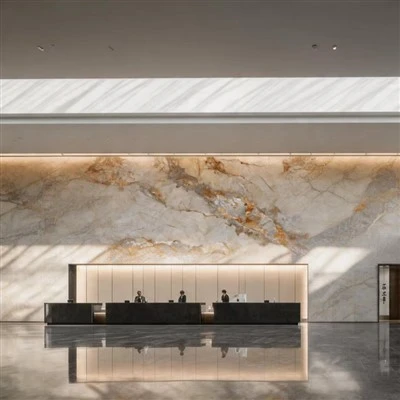
Oh, and one last thing—next time you’re at a stone yard, ask to see the different sizes. You’ll be shocked how big a 120×55 slab is, or how tiny a mini slab is. It’s way easier to visualize than just numbers. Don’t be shy to ask questions— that’s what suppliers are for. You don’t have to be a stone expert to get a good deal and the right size slab for your kitchen.
Quartz Surface References: Quartz Countertop Manufacturers Association.
Wuhu Junde New Material Technology Co., Ltd.
As one of the most experienced kitchen quartz slab manufacturers and suppliers in China since 1998, we warmly welcome you to wholesale top-quality kitchen quartz slab made in China here from our factory. If you have any enquiry about cooperation, please feel free to email us.
Address: No.8 Yulin Road, Xinwu Economic Development Zone, Anhui Province, China
E-mail: 1127319898@qq.com
WebSite: https://www.jundequartz.com/
