Hey everyone, and welcome back to the blog! If you’re deep in the market for utility tractors, I bet you’ve asked yourself at some point: Can these workhorses actually pull trailers? Let’s cut through the noise—because as someone who’s been in the utility tractor supply game for over 12 years, I get that question more than any other. I’ve sat with farmers, landscapers, even small business owners who’ve come in thinking “utility tractor” is just a fancy name for a lawn mower that’s okay for a light tow. Spoiler: that’s half right, and half totally wrong. Let’s break this down like we’re hanging out at a job site, not in a stuffy trade show booth. Utility Tractors
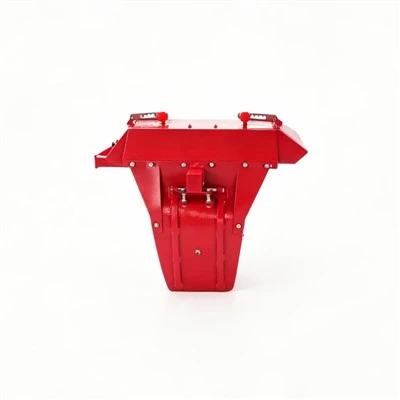
First off, let’s get one thing straight: not all utility tractors are built equal. When I say “utility tractor,” I’m not talking about the tiny, 15-horsepower (HP) models you see pushing a snowblower around a suburban driveway. Those are sub-compacts, and they’re never going to pull a trailer full of firewood or a small equipment trailer. We supply utility tractors that land in the 25 HP to 75 HP range—those are the ones that actually do towing. The key here isn’t just HP, though. It’s torque, which is the grunt that gets things moving, especially when you’re hauling a heavy load from a stop. Think of HP as your tractor’s top speed, and torque as its actual pulling power. A utility tractor’s built for that low-end torque, which is exactly what you need to pull a trailer without stalling the engine mid-hill.
Now, let’s talk trailer types, because that’s where the rubber meets the road (pun totally intended). If you’re a small-scale hobby farmer, pulling a 10-foot trailer full of hay bales? No problem. Our 35 HP utility tractors can handle that all day long, even over rough field terrain. We tested one last month—hauled 1,200 pounds of alfalfa from a far pasture back to the barnyard, and that’s nothing for those models. But if you’re a landscaper moving a 16-foot trailer full of sod, or a small contractor hauling a mini excavator (around 2,000 pounds)? You’ll want to step up to our 55 HP or 75 HP models. Those have the rear hydraulic drawbar rating that’s non-negotiable for proper towing. Wait, let’s explain that drawbar thing—because a lot of new buyers don’t know this. The drawbar is the metal hitch point at the back of the tractor, and every utility tractor has a maximum rated drawbar pull. For our 55 HP model, that’s 2,100 pounds, and the 75 HP hits 3,500 pounds. That’s not just a number we pull out of thin air—those are certified by the manufacturer, so you don’t have to worry about the frame snapping or the engine blowing up if you stick to the specs.
Wait, but let’s be real—we’ve all seen that guy on YouTube who’s got a tiny utility tractor trying to pull a huge trailer up a steep hill, and it’s straining so bad you think it’s going to tip over. Don’t be that guy. The biggest mistake new buyers make is overloading the tractor, not just the trailer. Let’s do the math here: total towing weight isn’t just the trailer. It’s the trailer itself, plus what’s in it, plus the weight of any accessories on the trailer, and even the tongue weight. Oh right—tongue weight is that part of the trailer that rests on the tractor’s hitch. That should be 10% of the total trailer weight for utility tractors. So if your total trailer load is 2,000 pounds, that means you’re putting 200 pounds on the tractor’s rear hitch. If you ignore that and overload the tongue, you’ll mess up the tractor’s weight balance—front end will lift, steering gets sketchy, and you’re way more likely to have an accident. I’ve had a customer bring back a 30 HP sub-compact a few years ago because he tried to pull a 1,800 pound trailer with it. He didn’t even check the drawbar rating, and he blew a seal on the transmission within a month. Lesson learned: always match the tractor to the trailer’s intended load, not the other way around.
Another thing that matters is the transmission. Most of our utility tractors come with either a hydrostatic transmission or a gear-drive (also called a manual shift) with a power take-off (PTO). Wait, the PTO is for powering attachments, right? But when it comes to towing, hydrostatic is usually the way to go for small to medium loads. Hydrostatic lets you creep along at super slow speeds without clutching, which is perfect for navigating uneven ground while towing. But if you’re hauling really heavy loads, the gear-drive models are better because they’re more durable under constant torque. We recommend our customers go with hydro for farm tasks, gear-drive if they’re doing regular heavy towing like contractors. Either way, every model we supply has a standard 2-inch receiver hitch too—so you don’t have to buy a separate aftermarket hitch, which is a win for budget.
Now, let’s address the “but what about terrain?” question, because that’s what gets people stuck. If you’re towing on flat pavement or a well-maintained gravel road, almost any of our mid-range utility tractors can handle it. But if you’re in mud, snow, or steep hills? You’ll want to make sure the tractor has 4-wheel drive (4WD). A lot of buyers skip 4WD to save money, but I can’t stress this enough—if you’re ever going to tow off-road, 4WD is non-negotiable. Our 4WD utility tractors have locking differentials too, which means if one wheel slips, the other two keep pulling. We had a customer last winter who used a 45 HP 4WD model to pull a trailer full of firewood up a snow-covered driveway—no issues at all. Without 4WD? He would’ve been stuck halfway up, no doubt.
Wait, let’s talk about common myths I hear all the time. First myth: “Utility tractors can’t pull heavy loads.” No, they just can’t pull loads heavier than their rated capacity. Our 75 HP model, for example, can pull a 3,500 pound trailer on flat ground, and 2,800 pounds up a 10-degree hill. That’s not nothing. Second myth: “You need a special license to tow a trailer with a utility tractor.” Nope, not in most places—utility tractors are classified as agricultural or off-road vehicles, so you don’t need a regular driver’s license to operate them on private property. Just make sure you follow local laws if you’re towing on public roads—most states require reflectors, brakes on the trailer if it’s over a certain weight, and slow-moving vehicle (SMV) signs. I always tell customers to check their local DOT rules before towing on the street.
Here’s something most suppliers won’t tell you: it’s not just about how much the tractor can pull—it’s about how safe it is to pull. Our utility tractors have automatic weight transfer systems that adjust the power to the wheels based on load, so you don’t have to be a professional operator to tow safely. We also offer towing packages that include trailer brakes, hitch extensions, and even weight distribution hitches for when you’re pulling heavy loads. Those packages are discounted when you buy the tractor from us, so it’s a no-brainer.
Let’s use a real-life example to make this concrete. Last year, we worked with a customer who owns a small landscape company in Ohio. He initially bought a 30 HP sub-compact because it was cheap, and tried to pull a 14-foot trailer full of sod (around 1,600 pounds). He called me after two weeks, panicking because the tractor was smoking and the transmission was slipping. We swapped it out for a 45 HP utility tractor with 4WD, and a 2-inch receiver with a 2,200 pound drawbar rating. Now he uses that same tractor to pull the sod trailer, a small sprayer, and even a mini dump trailer for hauling rocks. He’s told us it’s paid for itself in less than a year in saved labor and no breakdowns. That’s the kind of fit we’re here for—matching the right tractor to your specific towing needs, not just pushing the most expensive model.
Now, if you’re sitting here thinking, “Okay, this makes sense, but how do I know which tractor is right for my trailer?” Let’s run through a quick checklist. First, write down your total trailer load (trailer + cargo + tongue weight). Second, check the tractor’s maximum drawbar pull rating—make sure it’s at least 10% higher than your total load. Third, decide if you need 2WD or 4WD (4WD if you’re towing off-road ever). Fourth, pick a transmission type (hydro for ease of use, gear-drive for heavy towing). And last, don’t forget to factor in any future needs—if you think you might upgrade to a bigger trailer in 2 years, go for the next HP tier up, so you don’t have to buy another tractor soon.
At the end of the day, utility tractors absolutely can pull trailers—you just have to pick the right model for your needs, follow the specs, and don’t be that guy who overdoes it. We’ve spent years testing every model we supply, working with customers to make sure they get the right fit, and we stand behind every tractor we sell. If you’re in the market for a utility tractor and you have questions about towing capacity, hitch options, or anything else, don’t hesitate to reach out to our team. We’re not just suppliers—we’re guys who’ve worked with these tractors day in and day out, and we’re happy to help you find the perfect setup for your tasks. Whether you’re a hobby farmer, a landscaper, or a small business owner, we’ve got a utility tractor that’ll tow your trailer safely and reliably for years to come.
Oh, and one last tip: always take a test drive before you buy. Get behind the wheel, attach a trailer (if possible, bring your own or use one we have on-site), and test it on different terrains. That’s the only way to know how it handles towing, and you’ll catch any red flags before you make the purchase.
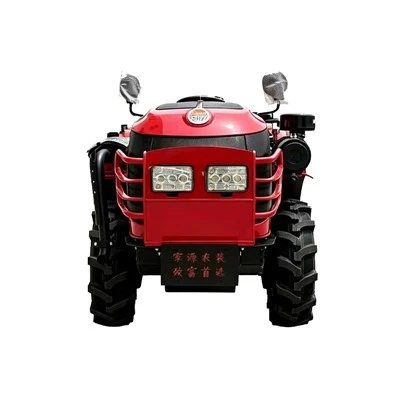
So yeah, to circle back to the original question: Can utility tractors pull trailers? 100% yes—when you get the right one, use it correctly, and follow the guidelines. If you’re ready to talk through your specific needs and find the perfect utility tractor for your towing, just connect with our team to start a procurement chat. We’re here to help every step of the way.
Utility Tractors References
- American Society of Agricultural and Biological Engineers (ASABE). “Standard S318.10: Tractor Drawbar Power and Force Rating,” 2021.
- Tractor Data. “Utility Tractor Towing Capacity Guide,” 2023.
- U.S. Department of Transportation (USDOT). “Slow Moving Vehicle (SMV) Sign and Towing Regulations,” 2022.
- National Small Farm Trade Association (NSFTA). “Sub-Compact vs. Compact vs. Full-Size Utility Tractor Use Cases,” 2020.
Shandong Jiayuan Agricultural Equipment Co., Ltd.
As one of the most professional utility tractors manufacturers and suppliers in China, we have world-leading production equipment and strong manufacturing capabilities. Please feel free to buy advanced utility tractors for sale here from our factory.
Address: No.2, No.002777 Zhongjiang West 4th Street, Yangzi Subdistrict, Binhai District, Weifang City, Shandong Province, China
E-mail: sdjynyzb@163.com
WebSite: https://www.jiayuantractor.com/
