If you’ve ever tackled a plumbing repair, HVAC installation, or even a DIY garden irrigation project, chances are you’ve run into press fit pipe connectors without even realizing it. I’m in the pipe connector business, and for years, I’ve fielded the same question from tradespeople and DIYers alike: “How does this thing actually work, anyway?” It’s easy to dismiss it as a fancy snap-together pipe fitting, but there’s actual engineering behind press fit that makes it stand out from old-style glue or threaded connections. Let me break this down like I do for my clients—no jargon, just clear, real-world context. Pipe Connector
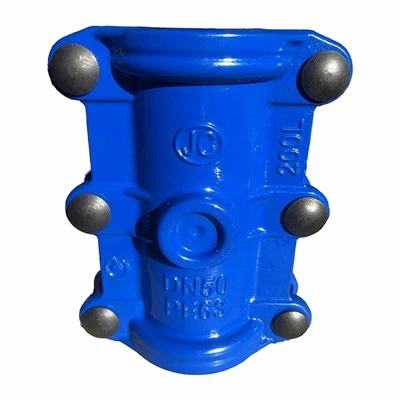
First, let’s start with what a press fit connector is, at its core. It’s a type of permanent pipe joint used primarily with metal pipes like copper, stainless steel, or carbon steel, though there are press fit versions for PEX and CPVC too. Unlike threaded joints, which rely on twisting male and female threads together and sealing with Teflon tape or pipe dope, or solvent-welded joints that melt pipe and fitting material together, press fit works on a mechanical locking principle with a built-in seal. The process is simple enough: you slide the prepared pipe end into the connector cavity, then use a specialized press tool to squeeze the connector around the pipe. That squeeze is where the magic happens.
Let’s dive into the science of that squeeze, because it’s not just brute force. A standard press fit connector has three key internal components: a sealing element, usually an EPDM or nitrile rubber O-ring; a locking ridge, a raised metal ring machined into the inner wall of the connector; and a structural body that gives the fitting its shape and strength. When a pipe end is cut to length, deburred (a critical step, I can’t stress that enough—burrs will scratch the O-ring and cause leaks), and cleaned of any oil or debris, you insert it into the connector until it hits a positive stop, a physical marker inside the fitting that ensures the pipe is inserted to the correct depth. Then the press tool, which has interchangeable jaws sized to match your pipe’s outer diameter, clamps down on the connector’s external profile. This action compresses the connector’s wall thickness evenly around the pipe.
Here’s where the two critical jobs are done at once. First, the rubber O-ring is squeezed between the inner wall of the connector and the outer wall of the pipe, creating a watertight, airtight seal that’s resistant to pressure, temperature swings, and even vibration. The second job is the locking ridge—when the connector’s metal is compressed, that ridge digs slightly into the outer surface of the pipe. It’s a shallow penetration, usually just a few thousandths of an inch, so it doesn’t weaken the pipe, but it creates a permanent mechanical lock that prevents the pipe from pulling out of the fitting, even under high pressure. That’s way different from a slip joint, which can come apart with enough force. I’ve seen this in action: a press fit joint on a commercial HVAC line that runs 120 PSI of water, no leaks, no shifts, even after years of heating and cooling cycles that make pipes expand and contract.
Now, why does this matter for my business, and for the people who use press fit connectors? Let’s talk about the advantages over traditional methods, because that’s why tradespeople keep coming to me for these fittings. First, speed. A threaded joint takes time to thread, seal, and test—for a 2-inch copper pipe, that’s at least a minute or two, maybe more if you’re working in a tight attic or wall. A press fit joint takes 5 to 10 seconds, start to finish. That’s a huge deal on a construction site where every hour of labor costs money, or for a plumber rushing to fix a leaky pipe before a client’s workday starts. I’ve had a residential plumber tell me press fit cut his kitchen remodel plumbing time in half last year, and that’s not an exaggeration.
Second, reliability. Solvent-welded copper joints can fail if the pipe isn’t properly cleaned, or if you don’t let the solvent cure long enough before pressurizing the line. Threaded joints can leak if the Teflon tape is wrapped wrong, or if you over-tighten and crack the pipe. Press fit eliminates a lot of those human error points. As long as the pipe is deburred, inserted to the stop, and the press tool is calibrated correctly (modern tools have LED indicators that show when the joint is properly pressed), the seal and lock are consistent. That’s why it’s the go-to for commercial buildings, hospitals, and schools where pipe failures can lead to costly downtime or even safety hazards.
But press fit isn’t perfect, and that’s something I always warn new users about. First, it’s not a solution for every pipe or every project. You can’t use it for gas lines in all regions, for example—some code authorities still require threaded joints for gas, so it’s important to check local plumbing codes before specifying. It also uses specialized tools, which isn’t a big deal for full-time tradespeople, but it’s a barrier for a DIYer who only does one small project a year. I’ve had a few customers come in trying to use a cheap hydraulic clamp as a press tool—don’t do that. It has to be a tool calibrated for the specific connector size to ensure even pressure; an uneven squeeze can cause a bad seal. Also, press fit isn’t meant to be taken apart. Once you press it, it’s a permanent joint. If you make a mistake, you have to cut out the fitting and start over, which is a small downside compared to the ease of installation.
Let me address a common misconception I hear a lot: people think press fit is “weak” because it’s not welded or threaded. That’s not true at all. For most common applications, press fit joints are actually as strong, if not stronger, than traditional joints. Let’s run the numbers: a 1-inch copper press fit joint can handle up to 1,500 PSI of pressure, which is way higher than the typical 40 to 80 PSI in residential water lines. For stainless steel pipes, press fit joints can handle even more, perfect for industrial applications or high-rise buildings where water pressure is higher. The locking ridge and the compressed metal create a joint that’s resistant to shear force, too—so if a pipe gets bumped or shifted a little, the joint won’t break.
Another point that’s near and dear to me as a supplier: quality control. When we manufacture press fit connectors, each one is tested for seal integrity and locking strength before it leaves our warehouse. We follow industry standards set by organizations like the International Association of Plumbing and Mechanical Officials (IAPMO) and the American Society of Mechanical Engineers (ASME), so our customers know they’re getting a fitting that meets strict safety guidelines. A bad connector from a no-name supplier can lead to a leak that causes water damage, mold, or even structural issues, so choosing a reliable manufacturer matters. I always tell clients: don’t cut corners on pipe connectors. A $5 cheap fitting that fails is way more expensive than a $10 high-quality one that lasts 20 years.
I’ve seen press fit evolve a lot over the years since I started in this business. Early press fit fittings were only for copper pipes, and they were mostly used in Europe, where the technology originated, before becoming popular in North America in the 2000s. Now we have press fit for almost every pipe type, from PEX for radiant heating systems to carbon steel for oil and gas lines. We also have press fit connectors for things like valves, manifolds, and even pipe caps, so you can create an entire plumbing system with all press fit joints, no threading or welding needed.
Let’s walk through a quick real-world example to make this concrete. Last year, a general contractor hired me to supply press fit connectors for a 10-unit apartment building in downtown Chicago. The original plan was to use threaded copper joints, but after they tested a sample press fit joint, they switched. Why? Their plumber calculated that the press fit would cut installation time by 40%, which translated to saving $12,000 in labor costs. Plus, the building’s code required pressure testing every joint after installation—with press fit, every joint passed on the first try, whereas with threaded joints, they had a 10% failure rate from over-tightening or bad Teflon tape. A year later, I followed up and the contractor said there hadn’t been a single pipe leak in the system, which was a huge improvement over their previous projects with traditional methods.
So when you’re choosing a pipe connector, whether you’re a seasoned plumber or a contractor working on a project, it’s not just about how easy it is to install—it’s about reliability, speed, and long-term performance. Press fit checks all those boxes for most applications, as long as you use the right tools, follow installation steps, and pick a quality product from a trusted supplier. I’ve spent years refining how we make our press fit connectors, testing new materials to make them more durable, and updating our product lines to meet changing code requirements, because I know that a good pipe joint is the foundation of any plumbing or HVAC system.
If you’re a contractor, plumber, or project manager looking for reliable press fit pipe connectors for your next job, or if you have questions about compatibility, installation, or code requirements, I’m here to help. Our team can provide product specs, sample fittings, and guidance to make sure your project goes smoothly. Reach out to our team to discuss your pipe connector needs and find the right solutions for your application.
Elbow Repair Clamp References
International Association of Plumbing and Mechanical Officials (IAPMO). (2022). Standard for Press Fit Pipe Fittings and Joints.
American Society of Mechanical Engineers (ASME). (2021). ASME B16.50: Pipe Joints for Press Fit Systems.
Plumbing-Heating-Cooling Contractors Association (PHCC). (2023). Installation Guide for Press Fit Pipe Connectors.
Copper Development Association. (2022). Performance of Press Fit Copper Pipe Joints in Residential Applications.
Fujian Fufa Valve Manufacturing Co., Ltd.
As one of the most professional pipe connector manufacturers and suppliers in China, we’re featured by quality products and good price. Please rest assured to buy durable pipe connector made in China here from our factory. Welcome to view our website for more information.
Address: Meilin Xikou Industrial Zone, Nan’an City, Quanzhou City, Fujian Province
E-mail: hongwenjin@fufafamen.cn
WebSite: https://www.fufavalve.com/
