If you’ve ever watched a metal shear slice through a thick steel plate with clean, precision cuts instead of messy tears or jagged edges, you’ve seen the work of a shear blade in action. As a metal shear supplier who’s spent 12 years sourcing, testing, and providing these critical components to manufacturing, construction, and metal fabrication shops across North America, I’ve learned that a shear blade isn’t just a simple metal knife—it’s a engineered part that directly impacts every cut, every project timeline, and even the safety of the workers operating the shear. Too many new fabricators underestimate how much choosing the right shear blade matters, so let’s break down what these blades are, how they work, and why they’re non-negotiable for anyone cutting metal at scale. Metal Shear
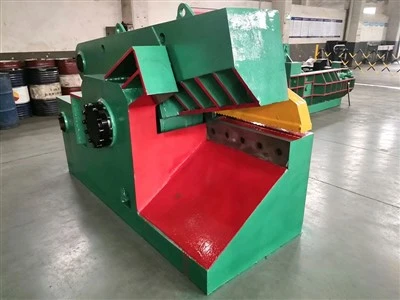
First, let’s start with the basics: what exactly is a shear blade for a metal shear? At its core, it’s a specialized cutting tool designed specifically for shearing operations—those high-force processes that separate metal sheets, plates, bars, or profiles without melting or deforming the material, unlike plasma or laser cutting. Unlike utility knives or band saw blades that grind or slice through material, shear blades use compressive force to bend metal past its yield strength, causing a clean fracture along a straight line.
These blades aren’t one-size-fits-all, though. They come in two primary types: stationary blades and moving blades, paired together in almost every mechanical, hydraulic, or manual shear. The stationary blade is bolted to the shear’s frame, remaining fixed during operation, while the moving blade is mounted to the shear’s ram, which exerts force to push the metal against the stationary blade. The gap between these two blades—called the shear clearance—is one of the most important specifications here; if it’s too wide, the metal will stretch and deform instead of cutting clean, and if it’s too narrow, the blades will rub against each other, causing excessive wear or even chipping.
Now, let’s get into the science that makes shear blades work, because this isn’t just “sharp metal”. When you feed a piece of metal between the two blades, the moving blade first contacts the metal at a specific point, creating a stress concentration. As the ram applies more force, the stress spreads through the metal until it reaches the material’s ultimate shear strength—the point at which the metal can no longer resist the force and splits along the shear line. For most carbon steels, this happens at a force of roughly 80,000 to 100,000 psi, which is why industrial shears have powerful hydraulic systems (often rated for 200 tons or more) to generate that kind of pressure.
But the blade’s material and geometry are what make it effective for different metals. For example, thin aluminum sheet needs a different blade than 2-inch thick mild steel plate. Aluminum is softer and more ductile, so its shear blades have a shallower bevel angle (the angled edge of the blade that does the cutting)—usually between 15 and 20 degrees—to avoid tearing the soft material. Thick mild steel, on the other hand, needs a steeper bevel angle (25 to 30 degrees) to concentrate force enough to cut through the dense material. Harder alloys like stainless steel or tool steel require even more specialized blades, often made from high-speed steel (HSS) or tungsten carbide, to resist the heat and friction generated when cutting tough materials.
Wait, let’s talk about blade materials in more detail, because this is where a lot of fabricators make a bad choice. Most standard shear blades for general use are made from carbon tool steel, like AISI 1095, which is affordable and holds a sharp edge well for mild steel, aluminum, and copper. But if you’re working with high-strength low-alloy (HSLA) steel, stainless, or even titanium, carbon steel blades won’t last long—they’ll dull quickly, chip, or deform under the extra force required. That’s where alloy tool steels like D2 or A2 come in; D2 has higher wear resistance than carbon steel, making it ideal for cutting repeated batches of medium-hard steel, while A2 offers better toughness, so it’s less likely to chip if a piece of thick metal is accidentally fed into the shear off-center.
For the toughest applications, like cutting 4-inch thick steel plate for bridge construction or heavy machinery, we supply shear blades with tungsten carbide tips. These blades are made by welding solid carbide segments to a steel blade body, which combines the high wear resistance of carbide with the shock absorption of steel—if you tried to make an entire blade out of carbide, it would be too brittle and crack under the force of heavy cuts. Carbide blades can cost 3 to 5 times more than standard carbon steel blades, but they last 10 to 20 times longer, making them a huge cost saver for high-volume fabrication shops.
Another common question I get is: how long does a shear blade last? The answer depends on three main factors: the type of metal being cut, the volume of cuts, and how well the blade is maintained. A carbon steel blade cutting 16-gauge aluminum might last 6 to 12 months with daily use, while the same blade cutting ¼-inch thick mild steel could dull in 2 to 3 months. Carbide blades, by contrast, can last 5 to 10 years if used correctly—we have one customer who cuts 2-inch steel plate for agricultural equipment, and their carbide blades are still going strong after 7 years.
But even the best shear blades won’t last if they’re not properly maintained. I see this mistake all the time: fabricators wait until a blade is so dull that it’s leaving jagged cuts and taking twice as long to process a batch before replacing it. Dull blades don’t just hurt productivity—they’re a safety hazard. When a blade is dull, it has to exert more force to cut through metal, which can cause the metal to bind or kick back toward the operator, leading to injuries. Routine maintenance is key: every 200 to 300 hours of use, blades should be checked for nicks or wear, sharpened by a professional with specialized shear blade grinding equipment (regular sharpening tools will ruin the blade’s bevel angle), and the shear clearance should be adjusted to match the blade’s thickness.
Now, let’s cover the types of shear blades you’ll encounter, because they’re not all the same. There are straight shear blades, which are the most common, used for cutting flat sheets and plates—these can be up to 20 feet long for large shears used in structural steel fabrication. Then there are specialty blades, like angle shear blades for cutting angle iron or L-shaped profiles, channel shear blades for I-beams and channel steel, and rod shear blades for cutting round or square bar stock. Each of these has a unique geometry designed to fit the shape of the material being cut, so you can’t use a straight blade to cut a 2-inch square bar without getting a bad, off-center cut.
I’ve also worked with custom blade orders, which come up when a fabricator has a unique project. Last year, a small aerospace fabrication shop needed to cut titanium alloy for aircraft parts, and standard blades weren’t holding up. We worked with a metallurgist to design a custom blade with a carbide matrix coating to reduce heat buildup, and adjusted the shear clearance to accommodate titanium’s low ductility. The shop told us after a month that the custom blades cut through titanium twice as fast as their old blades, with 90% fewer material defects—proof that matching the blade to your specific application is worth the investment.
A lot of new fabricators also ask if they can use general-purpose knives as shear blades, and the short answer is no. General-purpose knives are designed for soft materials like wood or plastic, with a thin bevel that can’t handle the high compressive force of metal shearing. Using a utility knife to cut steel will not only dull the knife in one cut—it can also cause the metal to bend or warp, leading to wasted material and rework. Shear blades are precision-machined to tight tolerances (often within 0.001 inches) to ensure the gap between blades is consistent, which is impossible with a standard knife.
As a supplier, my goal isn’t just to sell shear blades—it’s to help customers choose the right blade for their needs. I’ve seen shops try to cut thick stainless steel with a $50 carbon steel blade, only to spend $500 on rework and downtime when the blade dulls after a week. On the flip side, I’ve had small fabricators with low-volume jobs buy expensive carbide blades that they never use, wasting money they could have spent on other equipment. That’s why I always ask customers three questions before recommending a blade: what type of metal they’re cutting, the thickness of the material, and their average weekly cut volume. Those three answers are all you need to pick a blade that balances performance and cost.
Safety is another big piece I don’t see talked about enough when it comes to shear blades. Worn, dull blades are the number one cause of shear-related injuries in fabrication shops. When a blade can’t cut through metal cleanly, the material can slip, bind, or launch toward the operator at high speed, causing lacerations or even more serious injuries. That’s why OSHA recommends inspecting shear blades before every shift, replacing blades at the first sign of wear (visible nicks, uneven cuts, or increased ram force required), and training all operators to recognize the signs of a bad blade. I always emphasize to customers that a $200 blade replacement is a tiny cost compared to a workplace injury or a production shutdown.
Let’s wrap this up with a quick example to put it all in perspective. Last quarter, a construction company contacted me because their shear was leaving jagged edges on steel plates they were cutting for a highway bridge project, and their rework time had increased by 30%. They were using standard carbon steel blades that were 18 months old, cutting ¾-inch thick A36 steel. We recommended upgrading to D2 alloy steel blades, adjusting the shear clearance from 0.012 inches to 0.010 inches, and scheduling a professional sharpening for their stationary blade. Two weeks later, they called back saying their cut quality was perfect, rework time was down to almost zero, and their blade life had doubled. That’s the difference a properly matched shear blade makes.
If you’re running a metal fabrication shop, construction site, or any business that works with cutting metal, the shear blade is a part you can’t afford to overlook. A good blade doesn’t just make cleaner cuts—it saves time, reduces waste, lowers injury risk, and cuts long-term costs. Whether you’re cutting thin aluminum for car parts or thick steel for structural beams, having the right shear blade for your metal shear is non-negotiable.
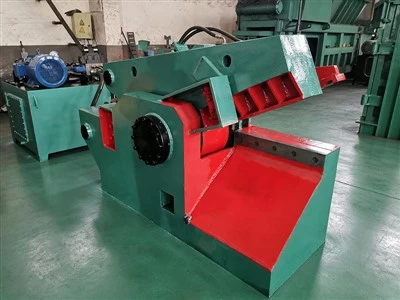
If you’re looking to upgrade your shear blades, replace worn ones, or need help finding a custom blade for a specific project, we’re here to help. Our team has 12 years of experience working with fabricators of all sizes, and we can recommend the right blade to fit your needs, no matter what metal or thickness you work with. We also offer professional sharpening services for all types of shear blades, to keep your equipment running at peak performance. Contact us today to discuss your requirements and get a quote tailored to your operation.
Baler Shear References
- Metallurgy for Engineers, ASM International, 2019
- Occupational Safety and Health Administration (OSHA) Guidelines for Metalworking Machinery, 2022
- Shear Blade Technology: Materials and Applications, Industrial Tooling Association, 2021
- AISI Tool Steel Data Sheets, American Iron and Steel Institute, 2020
- Fabrication and Cutting Processes for Structural Steel, American Institute of Steel Construction, 2023
Jiangyin Hangli Technology Co., Ltd.
Jiangyin Hangli Technology Co., Ltd. is one of the most professional metal shear manufacturers and suppliers in China. We are committed to providing high quality custom service and OEM service with low price. We warmly welcome you to buy high-performance metal shear for sale here from our factory. Also, pricelist is available.
Address: No. 11, Louxia Road, Zhouxi Village, Zhouzhuang Town, Jiangyin City, Wuxi City, Jiangsu Province, China
E-mail: sherry@hanglimachinery.com
WebSite: https://www.hanglirecycling.com/
