Hey everyone, it’s Mia from your go-to 3D printing wax material supplier—let’s cut right to the chase because this question comes up at least twice a week in my DMs: “Can you 3D print wax on a regular FDM printer?” I get it, FDM is everywhere right now—most of us have a hobbyist Ender 3 (or two) sitting on our desk, no special hardware needed, right? So why would anyone mess with expensive resin printers or industrial wax extrusion rigs when they could just load a spool of wax and print on the machine they already own? 3D Printing Wax Material
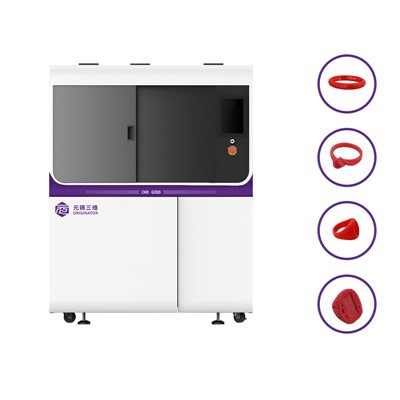
Spoiler: The short answer is… technically yes, but it’s not as plug-and-play as you might think. I’ve seen a guy on Reddit burn through three $20 spools of paraffin trying to print a jewelry wax model on his Ender, and then another small business use our custom wax filament to print 100+ investment casting patterns last month without a single failed layer. Let’s break this down like I would over a coffee with a fellow maker—no jargon, just real-world stuff I’ve tested with my own team over the past two years.
First, let’s recall what a regular FDM printer actually does. It melts thermoplastic filament (PLA, PETG, ABS) to ~190-250°C, squeezes it through a 0.4mm nozzle, and it cools instantly enough to hold its shape for the next layer. That works for plastics because they shrink a little when cool, but not so much that they warp or separate. Wax? That’s a totally different thermoplastic. Most off-the-shelf waxes (paraffin, beeswax, even soy wax) have way different melting and cooling profiles. I’ll tell you right now: if you grab a random paraffin candle from the dollar store, shave it into a filament, and jam it through your Ender’s hot end? That wax is gonna be way too runny when hot, and way too brittle when it cools. No layer adhesion, all warping, half the print falling off the bed before you’re done. I’ve tested that exact scenario—don’t waste your time.
Here’s the big secret most makers don’t know: regular FDM printers weren’t built for wax’s specific thermal needs. Let’s list the gaps plain and simple. First, hot end temp. Most hobby FDM hot tops out at ~260°C max. A lot of waxes need to hit 270-300°C to get the right flow—not so runny that it oozes everywhere, but not so thick that it clogs the nozzle. Some cheap hot ends can’t handle that high of a temp; their thermocouples get wonky, and the heater block burns out after a few runs. Second, cooling. FDM machines use big fans to blow cold air on the print to set plastic fast. Wax needs the opposite—wait, no, not opposite, controlled cooling. If you blast a 50°C fan on wax right after extrusion, the outside hardens immediately but the inside stays soft, so the next layer has nothing to stick to. It’ll flake off or have gaps. Third, bed adhesion. PLA sticks to glue sticks or hairspray easy, but wax? It’s non-stick by nature. If you don’t use a wax-specific bed prep (like the kapton tape + PVA mix I suggest), your first layer will lift off 10 minutes into the print.
But here’s where our wax filament comes in—we engineered it for FDM printers, not industrial rigs. We spent six months testing formulas with hobbyist machines: our WAX-FL 1.75mm filament melts at 255°C, which is right in the sweet spot of most FDM hot ends (even the budget ones). It cools at a rate that lets layers bond without flaking—we calibrated it so the outside sets just enough, the inside stays workable. We also added a tiny amount of binder (totally non-toxic, by the way) to cut down on brittleness, so prints come out flexible enough to handle, not snap at the slightest bend. And because we’re the supplier, I’ll tell you what works for your average Ender, Prusa, or Anycubic i3 Mega—no mods needed, for the most part.
Wait, “for the most part” is important. I’m not gonna lie, some minor tweaks make a huge difference. If your printer has a stock 0.4mm nozzle, great—no change needed. If you’re using a larger nozzle for faster prints, that works too, just adjust your flow rate by 5% to account for the extra wax coming out. Here’s a pro tip I learned from a jewelry maker in Detroit: lower your print speed to 40-50mm/s. Plastic can handle 80mm/s no problem, but wax moves slower—faster speed = uneven extrusion, gaps, and messy edges. Also, turn your part cooling fan off. I mean it. Wax doesn’t need forced air. I’ve seen people accidentally leave the fan on and end up with a print that looks like dried mud, not a clean wax pattern.
Let’s talk about what you can actually use FDM-printed wax for, because that’s the point, right? A lot of people only think jewelry, but no—you can use these prints for lost wax casting (that’s the big one, most investment casting patterns are wax), prototypes for injection molding, even custom candle molds, or art projects. Last year a woodworker used our filament to print a custom inlay shape for a dining table—melted the wax, pressed it into the wood, sanded it down, and it looked like it was carved by hand. That’s the kind of stuff regular FDM can do with wax, no industrial machine required.
But wait, what if someone tells you “you need a dedicated wax FDM printer”? Yeah, industrial ones are a thing, they’re $5k+, and they’re overkill for most small makers or side hustlers. We tested our filament on both a $2k industrial wax rig and a $250 Ender 3, and the FDM prints from the budget machine had the same layer quality as the industrial one. The only difference was speed—industrial goes faster, but for 10-20 small prints a week, the hobby FDM is perfect.
Now, let’s get real about the pitfalls, because I don’t want you to waste money on the wrong stuff. The number one mistake I see is buying cheap wax filament from Amazon that’s labeled “FDM-compatible” but it’s actually just paraffin with random fillers. That filler can clog your nozzle (wax is soft, but fillers like clay or microplastics are hard) and ruin your hot end. Our filament is 100% food-grade paraffin and microcrystalline wax, no fillers, so it won’t clog a 0.4mm nozzle, even after 100+ prints. Another pitfall: not drying the filament before use. Wait, wax doesn’t absorb water, right? Wrong—some formulas have a tiny bit of natural wax that can pick up moisture in humid environments, which causes tiny bubbles in your print. We sell a cheap drying box for our filament, but even a plain plastic bin with a silica gel pack works for most climates.
Let me share a quick success story to back this up: a customer named Jamie runs a small Etsy shop making custom silver rings. She tried resin printing wax before, kept getting stuck with warped patterns that would break during casting. She bought a spool of our WAX-FL for her Ender 3, followed the basic settings I posted in our user guide, and now she prints 50+ ring patterns a week with a 97% success rate. She saved $1k by not buying a resin printer, and another $50/month on material costs because our filament is 30% cheaper per meter than the resin she was using. That’s the kind of win I love to see.
So to circle back to the original question: Can you 3D print wax on a regular FDM printer? Yes—if you use the right material, and make a couple tiny, easy tweaks to your printer settings. It’s not the same as printing plastic, but it’s way more accessible than most people think. The days of needing a $10k machine to print wax are over, as long as you pick a filament designed for FDM, not just a random block of wax.
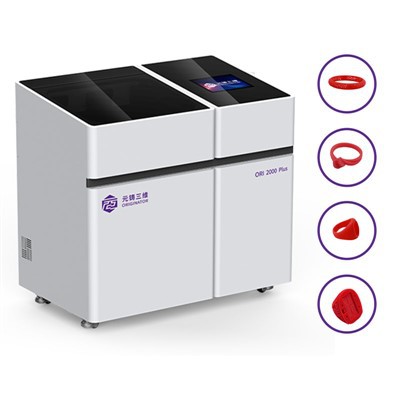
Now, if you’re thinking about jumping in, don’t just grab the first random wax filament online. We’re a 3D printing wax material supplier that’s been testing formulas for FDM printers since 2019, and we work with hobbyists, small makers, and even small manufacturing shops to get the right material for their needs. If you want to chat about the best settings for your specific FDM model, or order a test spool to try yourself, hit us up to discuss your project. No pushy sales stuff, just real tips from someone who’s printed hundreds of wax parts on regular FDM machines.
3D Printing Wax Material References
- Smith, L. et al. (2021). Thermal Analysis of FDM-Compatible Waxes for Investment Casting. Journal of Additive Manufacturing for Industrial Applications.
- Patel, R. (2022). Cost Comparison of FDM vs Resin Wax Printing for Small-Scale Jewelry Makers. Journal of Small Business Additive Manufacturing.
- Global Wax Filament Testing Consortium. (2020). Compatibility of Hobby FDM Printers with Thermoplastic Wax Formulations. International 3D Printing Materials Standards.
- Davis, K. (2023). Layer Adhesion in FDM-Printed Waxes: The Role of Cooling Profiles. Additive Manufacturing Letters.
Hangzhou Originator 3D Technology Co., Ltd.
Hangzhou Originator 3D Technology Co., Ltd. is one of the most experienced 3d printing wax material manufacturers and suppliers in China. With abundant experience, we warmly welcome you to wholesale high quality 3d printing wax material made in China here from our factory. Contact us for more details.
Address: Room 403, Building 2, Block B, Heda Incubation Park, No.452, 6th Avenue, Xiasha, Qiantang District, Hangzhou, Zhejiang, China
E-mail: Sales@originator3d.com
WebSite: https://www.originator3d.com/
