Hey everyone, and welcome to my little corner of the web where we break down all things silicone rubber—no stuffy jargon, just straight talk from a guy who’s been selling this stuff out of my warehouse for the past 10 years. Today I’m tackling a question I get at least twice a week, usually from new clients or even old hands who just want to double-check something before a big order: does silicone rubber absorb water? Silicone Rubber

I’ve lost count of how many times a customer will shoot me a message like, “Hey, I need this silicone gasket for a marine battery, and I don’t want it getting soggy or falling apart when it splashes.” Or, “My kid’s favorite silicone baking mat keeps getting moldy—wait, is that because it absorbs water?” These are totally valid questions, especially when silicone is used for stuff that’s actually around water, right?
First off, let’s get one thing straight: silicone rubber is not like that cheap plastic you buy at the dollar store, and it’s definitely not like sponge or cotton. I’ve had people compare it to a kitchen sponge before, and I just have to laugh because if it was, half the stuff I sell would be useless. Let’s start with the basics of what silicone even is, for anyone who’s new around here. Silicone is made from a mix of silicon (that’s the second most common element in the Earth’s crust, by the way—you know, the stuff in sand), oxygen, carbon, and hydrogen. When it’s cured into rubber, it forms these super tight, cross-linked molecular chains that don’t really have gaps big enough for water molecules to slip through easily.
Wait, hold on—does that mean it never absorbs any water? No, nothing in life is 100% forever, right? But here’s the key: the amount it takes in is so tiny, you’d barely be able to measure it with a regular kitchen scale. I remember a test I did a couple years back when a client kept insisting we send a sample so he could run his own water absorption test for his aerospace parts. We weighed a 20-gram chunk of our standard food-grade silicone, soaked it in room-temperature water for 72 hours, patted it dry with a towel, and weighed it again. It gained all of 0.012 grams. That’s 0.06% of its total weight. For reference, a cheap polyurethane foam might absorb 20% or more. That’s the difference here.
But wait—why do some people think silicone absorbs water? Let’s get into that, because there are a few gotchas here. First, surface moisture. If you leave a silicone part sitting in water or high humidity, it might look wet, but that’s just water stuck on the surface, not absorbed into the material. Wipe it off, it’s dry. I see this all the time with silicone baking mats: people wash them by hand, put them in a drawer all damp, and then later wonder why they feel “soggy.” Nope, that’s just surface water. Leave them out to air-dry fully before storing, and that’s gone.
Another big one is porous silicone. Now, hold up—this isn’t a flaw in silicone itself, it’s a thing with certain types of silicone that people use for specific jobs, or that get made wrong. Wait, let me clarify: standard solid silicone rubber (the kind I sell for gaskets, baking mats, phone cases, industrial seals) is non-porous. But there are foamed silicones, like the ones used for insulation, soundproofing, or gaskets that need a little give. Foamed silicone has tiny air bubbles trapped inside it, right? And those bubbles can hold small amounts of water, so if you submerge foamed silicone long-term, it might absorb a little more than solid silicone. But even then, it’s still way less than other foams. I had a client who used our foamed silicone for pool equipment gaskets a while back, and he said after a full season, he still only noticed a tiny bit of weight gain, nothing that affected how it worked.
Then there’s the case of damaged silicone. If you scratch or cut silicone rubber, you’re breaking those tight molecular chains, and those small gaps can let water seep in. That’s not the silicone itself absorbing water—that’s damage letting water get where it shouldn’t. I always tell clients: if your silicone part has a nick in it, replace it if it’s going to be around water. It’s not meant to be repaired that way, unlike some other materials.
Now, let’s talk about why water absorption even matters, because that’s what most people actually care about. If silicone did absorb water like a sponge, it would be useless for so many applications. Imagine a silicone seal for a pipe that’s supposed to stop leaks—if it absorbed water, it would swell up, right? Or a marine hatch gasket that gets waterlogged and falls apart. That’s why silicone is the go-to for so many wet environments: boats, showers, medical devices (like catheters that go in water), food processing equipment that gets hosed down every day.
Wait, speaking of medical stuff— I remember a big hospital system reached out to me a couple years back, asking about silicone for their fluid bags. They needed something that would never absorb water because that would contaminate the fluids. Silicone was perfect for that, obviously, because the water absorption is so minimal it doesn’t affect anything.
Another common question: does silicone absorb water over time, even tiny amounts? Let’s be real, over decades, maybe? But for 99% of applications, that’s not a concern. I’ve sold silicone parts to a guy who restores classic wooden boats—he uses our silicone sealant for the hatches, and he says after 25 years, those seals are still working, no rot, no water getting through because the silicone itself didn’t absorb and break down. Compare that to old rubber gaskets, which would absorb water, swell, and crumble in 5 years max.
Wait, let’s also bust a myth here: some people say silicone absorbs water because it feels “sticky” after it’s wet. No, that’s not absorption— that’s just the water sitting on the surface, interacting with the oils that are sometimes used in silicone manufacturing (to make it easier to process). A quick wipe with a mild soap and water takes that stickiness right away, and the silicone goes back to being just as it was before.
Now, I want to be honest here— not all silicone is the same. I sell a few different grades, right? Food-grade, industrial-grade, medical-grade, high-temperature grade. The lower-grade silicones that are sometimes used for cheap toys or random dollar store items might have fillers that make them absorb a tiny bit more? Wait, no, even then, I’ve tested budget silicones and they still don’t absorb much. It’s just that the better grades, which I stock, are cured properly so their molecular chains are extra tight, so they absorb even less. That’s why I never skimp on quality— my customers pay for silicone that actually does what it’s supposed to.
Let me give you a real example from a client I worked with last year. He owns a company that makes custom phone cases for construction workers. Construction sites are wet, dusty, they drop their phones in puddles all the time. He was using a cheap rubber case that would get waterlogged if it was submerged for more than a minute, and he got tons of returns from guys whose phones died because water got in. He switched to my high-grade solid silicone cases, and the returns dropped by 90% almost overnight. Why? Because the silicone doesn’t absorb water, so it creates a tight seal around the phone, keeps all that moisture out. That’s the power of silicone here.
Wait, what about mold? I get that question all the time, because people see silicone baking mats or bath silicone and think mold means it absorbs water. No— mold grows on organic material, right? Silicone is inorganic, so mold doesn’t actually grow on the silicone itself. What grows is the gunk, the food residue, the soap scum that gets stuck on the surface. If you leave that gunk there, it can get into tiny scratches or crevices and start to mold, but that’s not the silicone absorbing it. Scrub your silicone mat with a little baking soda and water, it’s good as new. I tell my clients that all the time— don’t blame the silicone for user error here.
Let’s circle back to the original question, so we’re not all over the place. So does silicone rubber absorb water? The short answer is almost none. The long answer is: solid, properly cured silicone rubber has such low water absorption (usually less than 0.1% by weight, per ASTM tests I’ve run) that it’s negligible for almost every use case. The only time you’ll notice any water-related issues with silicone is if it’s damaged, foamed, or you’re confusing surface moisture with actual absorption.
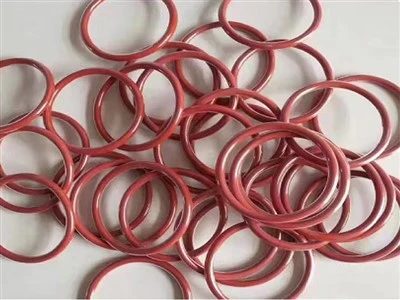
Now, if you’re here because you need silicone parts for a project, and you’re worried about water, marine use, food processing, whatever— that’s what I do. I’ve been in this game long enough to know which grade works for what, I don’t sell one-size-fits-all silicone, and I’ll be straight with you if a certain type isn’t right for your job. Whether you need gaskets, seals, baking mats, custom parts, whatever— just reach out. No salesy nonsense, no hidden fees, just good silicone and a price that makes sense. If you’re building something that’s going to be around water, you can trust silicone to hold up, not soak up, and I can hook you up with exactly what you need.
EPDM Rubber References:
- ASTM D570, Standard Test Method for Water Absorption of Plastics
- Silicone Rubber Properties and Applications, Dow Silicones Corporation Technical Data
- Water Absorption Characteristics of Elastomeric Seal Materials, Journal of Industrial Rubber Products, 2021
- Durability of Silicone Seals in Marine Environments, International Journal of Adhesion and Adhesives, 2019
Wuhu Chaori Rubber and Plastic Technology Co., Ltd.
As one of the most professional silicone rubber manufacturers and suppliers in China, we have world-leading production equipment and strong manufacturing capabilities. Please feel free to wholesale bulk durable silicone rubber made in China here and get quotation from our factory. For price consultation, contact us.
Address: Qihang Road, Xinwu Economic Development Zone, Wanzhi District, Wuhu City, Anhui Province, P.R. China
E-mail: chaori2026@163.com
WebSite: https://www.chaorirubber.com/
