Hey there, and welcome back to my little corner of the web—where I nerd out over all things measuring devices, and yeah, I’m the guy who’s been in the measuring devices game for over a decade now. Let’s talk about something I get asked all the time lately: what even is a non-digital measuring device? I know, I know, in a world where every phone has a built-in tape measure, smart watches track our every move, and IoT sensors monitor literally everything, non-digital stuff might feel like it’s from another era. But trust me, it’s not only still relevant—it’s got a whole set of perks that even the fanciest tech can’t touch. Let’s break this down, no stuffy jargon, just real talk from someone who’s sold these gadgets to carpenters, lab techs, bakers, and everyone in between. Measuring Devices

First off, let’s keep it simple: a non-digital measuring device is any tool that measures length, volume, weight, temperature, pressure, or whatever else without using a digital display, battery, or microchip. That’s it. It’s basic, mechanical, no fancy power source required. But wait, don’t mix “simple” with “outdated.” I see a lot of people write off these tools as old-school relics, but that’s a huge mistake. Let’s use a common example: a classic steel tape measure. Sure, some people swear by the digital ones that pop up a number when you pull it out, but I’ve had construction workers tell me the old-school ones don’t die mid-job when it’s raining, or when you drop them off a ladder, or when you forget to charge them overnight. Digital tapes are great for quick indoor jobs, but out on a worksite where the power’s out, the sun’s beating down, and you need to measure a 50-foot beam? Give me that non-digital steel tape every single time.
Another big one: analog scales. If you’ve ever weighed yourself on a scale that just has a big dial and numbers, no screen, that’s non-digital. I supply these to small bakeries all the time. The bakers I work with say digital scales can glitch if they get flour on them, or if the battery dies right when they’re measuring the perfect amount of yeast for a batch of sourdough. The analog ones? Wipe them off with a rag, and they keep working. No calibration trips every six months, no weird error codes. It’s just a spring and a dial—old technology that works because it’s straightforward.
But here’s the thing, non-digital measuring devices aren’t just for rugged jobs. They’re everywhere, even in places you might not notice. Let’s talk about a liquid-in-glass thermometer—you know, the ones with the red liquid that goes up a tube, no battery. Lab techs use these all the time for precise temperature measurements because they don’t rely on electronics that might be affected by electromagnetic interference (EMI). If you’ve got a bunch of other machines running in a lab, a digital thermometer might pick up extra signals that throw off its reading, but a mercury-free liquid-in-glass one? It just measures the actual temperature, no extra noise. That’s a big deal for accuracy.
Wait, let’s cover a common misconception right now: non-digital doesn’t mean less accurate. A lot of folks assume that because there’s no digital display, the measurements are rough. But that’s not true. Take a Vernier caliper—wait, that’s a non-digital tool used for measuring tiny lengths, like the thickness of a coin or the diameter of a bolt. A good mechanical Vernier caliper can measure things to within 0.02 millimeters, which is way more precise than a lot of consumer digital calipers I’ve seen. I’ve sold these to machinists who work on engine parts, medical devices, and even aerospace components—they won’t touch a digital caliper for critical work because the mechanical ones are more consistent, no screen lag or random glitches.
Another example: dial pressure gauges. If you’ve ever seen a gas station gauge that tells you how much air to put in your tires, that’s a non-digital pressure gauge. Industrial plants use these for monitoring pipes and machinery because they don’t need power, and they’re way more reliable in harsh environments—extreme heat, cold, vibration. Digital pressure gauges might have a higher tech look, but if you’re in a refinery where everything’s shaking all day, a dial gauge isn’t going to lose its calibration or die when the power goes out.
Now, why does this matter for you, especially if you’re someone who needs to buy measuring devices? Let’s talk about use cases, because that’s where non-digital tools shine. First, rugged, outdoor, or remote environments. If you’re a roofer measuring a roof on a 100-degree day, or a surveyor working in the woods with no cell service, a non-digital tape, a compass, a level—those tools don’t need batteries. You never have to worry about a dead tool when you’re in a place where charging is impossible. I’ve had a customer tell me he once had a digital tape die halfway through measuring a 100-foot well he was installing—cost him hours and a delayed job. He switched to non-digital after that, and he’s been a repeat customer ever since.
Second, cost. Let’s be real—non-digital measuring devices are way cheaper than their digital counterparts, especially for heavy use. A good 25-foot steel tape is like $15, while a digital one is $40 or more. An analog scale for a small bakery is $50, a digital scale with similar capacity is $100+. If you’re a small business owner trying to keep costs down, that’s a no-brainer. And they last forever— I’ve seen carpenters use the same non-digital tape for 20 years, and they just replace the hook when it wears out. Digital ones? They usually die in 5 years, tops, because of battery corrosion or screen damage.
Third, simplicity. You don’t need a degree in engineering to use a non-digital tool. A kid can read a tape measure, a baker can read a scale, a lab tech can read a thermometer. No Bluetooth pairing, no apps to download, no user manuals with 50 pages of settings. When you’re in a rush, or when you don’t have time to troubleshoot a digital tool that’s acting up, non-digital just works. I had a construction manager tell me he keeps a handful of old tapes in his truck for his new guys, because half of them can’t figure out how to use the fancy digital ones without watching a YouTube tutorial. That’s a huge pain point—non-digital tools are intuitive.
But wait, I’m not here to say digital is useless. Don’t get me wrong, digital measuring devices have their place. If you’re doing a quick home renovation indoors, a digital tape that stores measurements and connects to your phone is awesome. If you’re a scientist working in a climate-controlled lab, a digital thermometer with high precision is perfect. But non-digital tools fill a gap that digital can’t—they’re reliable when power or connectivity is out, they’re cheaper, they last longer, and they’re simpler to use.
Let’s also talk about sustainability, because that’s a big topic these days. Digital measuring devices have batteries, which need to be replaced every few months, and those batteries end up in landfills. Non-digital tools don’t have any batteries—so less e-waste. I’ve had a few eco-conscious customers tell me that switching to non-digital tools helped them cut down on their waste, which is a huge win for the planet. And since they last so long, you don’t have to replace them as often, which means less packaging and less manufacturing waste overall.
Now, as someone who supplies measuring devices, I’ll be straight with you: I carry both digital and non-digital tools. But I always make sure my customers understand the difference, so they can pick what’s right for their needs. A lot of suppliers just push the digital stuff because it’s more expensive, but I care about my customers getting the right tool for the job, not the one that makes me more money. For example, if a customer is a hobbyist doing a small deck in their backyard, I’ll recommend a digital tape if they want, but if they’re a professional building decks all year, I’ll tell them the non-digital steel tape will save them money in the long run because it won’t die on them mid-job.
I’ve seen a lot of trends come and go in the measuring devices industry, and lately, there’s been a push towards all things smart and connected. But non-digital tools are still holding their own, and for good reason. They’re not just a relic of the past—they’re a functional, reliable option that solves real problems that digital tools can’t.
If you’re someone who’s tired of dealing with dead batteries mid-project, expensive tools that break after a year, or complicated tech you don’t need, maybe it’s time to give non-digital measuring devices a try. I’ve been in this game long enough to know what works, and I’ve built my business on giving my customers the best tools for their specific needs, no fluff, no pushy sales tactics.
If you’re looking to stock up on non-digital measuring devices for your business, or if you just have questions about which tools are right for your project, feel free to reach out. I’m always happy to help—whether you’re a small bakery owner needing an analog scale, a construction manager needing heavy-duty steel tapes, or a lab tech needing precision mechanical calipers. Just get in touch to talk through your needs, and I’ll point you to the tools that will work best for you.
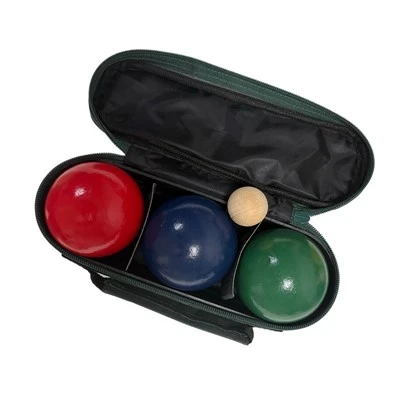
Plastic Bocce Ball References
- National Institute of Standards and Technology. (2022). Mechanical Measuring Devices: Calibration and Reliability for Industrial Applications. U.S. Department of Commerce.
- Occupational Safety and Health Administration. (2021). Tool Selection Guide: Non-Powered Measuring Equipment for Construction Sites. U.S. Department of Labor.
- International Organization for Standardization. (2019). ISO 9001:2015 Clause 7.1.5: Measuring Equipment Control for Precision Manufacturing. ISO Central Secretariat.
- Environmental Protection Agency. (2023). E-Waste Reduction: Non-Digital Measuring Devices as a Sustainable Alternative. U.S. EPA.
Hebei Honde Industrial Trade Imp. & Exp. Co., Ltd.
As one of the most experienced measuring devices manufacturers and suppliers in China, we have world-leading production equipment and strong manufacturing capabilities. Please feel free to wholesale customized measuring devices made in China here from our factory.
Address: Room 1904, Yintai International Building, Guang’an Street, Chang’an District, Shijiazhuang, Hebei Province
E-mail: activeballs@hbhonde.com
WebSite: https://www.hbactiveballs.com/
