If you’ve ever stepped foot on a dairy farm, you know milk isn’t just a drink—it’s the lifeblood of thousands of family operations around the world. For farmers, the right milk tank isn’t just a piece of equipment; it’s a tool that keeps milk fresh, maintains product quality, and prevents costly waste. But here’s the thing: I talk to dairy producers every single week who either guess their tank size or use a one-size-fits-all approach, and that’s where problems start. Too small, and you’re hauling milk multiple times a day, burning extra fuel and risking temperature fluctuations. Too big, and you’re wasting money on a unit that sits half-empty 90% of the time. That’s why I’m breaking down how to calculate your milk tank capacity like a pro, with real-world context from 15 years as a supplier of industrial dairy farm milk tanks. Dairy Farm Milk Tanks

First, let’s get one basic rule straight: your milk tank capacity is never a one-off number—it’s based on your farm’s unique output, and that changes throughout the year. I’ve seen it firsthand with small dairy operations I work with: a farm with 50 cows might produce 50 gallons a day in the winter, and jump to 75 gallons in the spring when fresh grass hits their pastures. If you buy a tank sized for winter, you’ll be overflowing in the spring, and vice versa. That seasonal shift is non-negotiable, so don’t skip that step.
Let’s start with the core formula most farmers learn, but most get wrong. The basic equation is: Annual peak daily milk production ÷ Number of pickups per week = Minimum tank capacity. Wait, let’s simplify that and make it actionable. Step one: Figure out your daily peak milk yield. How do you do that? Look at your milk production logs from the last two years. If you don’t have logs, track it for 30 days straight, focusing on your busiest month (usually spring, when cows are on high-nutrient forage). For example, if you have 80 milking cows, and each produces an average of 2.2 gallons of milk per day during peak season, your daily peak is 176 gallons (80 x 2.2 = 176). That’s your starting number.
Next, factor in how often your bulk hauler picks up milk. Most small to medium dairy farms have pickups 2 to 3 times a week, while larger operations might have daily pickups. Let’s use that 80-cow example: if pickups are twice a week, you divide your 176 gallons by 2, which gives you 88 gallons. Wait a second—so a 100-gallon tank would work, right? Not so fast. Here’s where 90% of farmers make a mistake: you need to leave 10 to 15% of the tank empty for agitation and movement during transport. Milk expands slightly when agitated, and you don’t want it spilling or overflowing when your hauler connects the transfer line. So subtract that extra buffer. Using the same example: 88 gallons x 0.85 = 74.8 gallons, meaning a 100-gallon tank would give you just enough space. But wait—what if you have 3 pickups a week? Let’s recalculate: 176 ÷ 3 = ~58.7 gallons. Subtract 15% buffer: ~49.9 gallons, so a 60-gallon tank would be ideal. That makes sense, right?
But hold on—this is the formula for a typical operation, and there are a bunch of hidden variables that change everything. Let’s talk about cow type, because not all cows produce the same. A Holstein cow (the most common dairy breed in the U.S.) averages 2.5 to 3 gallons a day during peak, while a Jersey might average 1.8 to 2.2 gallons. If your farm is transitioning to a different breed, or you’re raising heifers that will be milking soon, you have to account for that growth. I had a customer last year who had 60 Holsteins, planning to add 20 more, and he bought a 120-gallon tank based on his current 60 cows. By the time his new heifers calved, he was producing 180 gallons a day in peak season, and his old tank was overflowing so much he had to haul milk twice a week, which almost ate into his profit margin. Lesson learned: if you’re expanding your herd, add 10 to 20% extra capacity upfront instead of guessing later.
Another big variable: storage and temperature. Wait, no—we’re calculating capacity, but tank capacity also ties into how you maintain milk quality, which impacts how much milk you can store without spoiling. Milk has to stay at 38 to 40 degrees Fahrenheit in the tank, and if your tank is too small, you might have to turn off the cooler early to avoid overflow, which raises the temperature and risks bacterial growth. That’s a hidden cost: spoiled milk isn’t just thrown away—it can lead to lower prices from your processor, or even penalties for off-quality milk. I had a dairy farmer in Wisconsin tell me last year he lost $1,200 in a month because his 75-gallon tank was too small, so he had to stop cooling early, and 15 gallons of milk went bad. Getting the right capacity avoids that.
What about smaller hobby farms? A lot of my customers are people who own 10 to 20 cows, not commercial operations. Their needs are different. A hobby farm with 15 cows, each producing 1.5 gallons a day, might have a peak yield of 22.5 gallons. If they pick up milk once a week, that’s 22.5 gallons total for the week, so a 30-gallon tank would work. But again, add 15% buffer, so that’s 25.5 gallons, making a 30-gallon tank perfect. For hobby farms, size doesn’t need to be huge—what matters is that it’s easy to clean, fits in their milking parlor, and has enough cooling power for small, variable yields.
Wait, let’s cover a common myth I hear all the time: “I should just buy a larger tank so I don’t have to worry about it.” No. Larger tanks cost more upfront, use more electricity to cool the extra space, and take up more room in your parlor or milk house. I had a customer with a 200-cow operation who bought a 500-gallon tank because he thought it was “safer,” but he only produced 350 gallons a day in peak season, and he was paying $80 a year extra in electricity for the extra cooling, plus he had to extend his transfer hoses to get to the tank, which added maintenance costs. The sweet spot is matching your peak weekly production to your pickup frequency, with the 15% buffer—no more, no less.
Let’s also talk about how to adjust for off-peak seasons. In winter, cows produce 15 to 20% less milk, so you can drop your capacity calculation by that amount. If your peak is 176 gallons, your winter daily is ~140 gallons, so if you still have twice-weekly pickups, that’s 70 gallons, so you can even use the same 100-gallon tank, which is perfect. That’s another reason the 15% buffer works—it gives you a little room for those seasonal shifts without buying a new tank every few months.
Now, let’s put this all together with a real example, one I helped a dairy farmer in Ohio work through last year. He had 70 Holstein cows, tracked two years of milk logs, and found his peak season (April to June) daily yield was 154 gallons. He did pickups twice a week, so 154 ÷ 2 = 77 gallons. Add 15% buffer: 77 x 0.15 = 11.55, so 77 + 11.55 = 88.55 gallons. I recommended a 100-gallon vertical milk tank. Six months later, he reached out to me saying it was exactly the right size—no overflow during peak, no wasted space in winter, and his electricity bill was down 12% from his old 150-gallon tank. That’s the kind of outcome we aim for.
What about mistakes to avoid? First, don’t use average yearly production instead of peak. I see farmers do this all the time—they take their total annual average of 120 gallons a day and buy a 60-gallon tank for twice-weekly pickups, which is half of what they need in peak season. Second, don’t forget expansion if you’re adding cows. A 20% buffer for herd growth is a safe bet for the next three to five years. Third, check the dimensions of the tank before you buy. A 100-gallon tank might fit in a small parlor if it’s vertical, but if it’s horizontal, it might stick out into walkways or take up too much floor space. That’s something I always walk customers through when they’re choosing a tank—capacity isn’t just about volume, it’s about fitting your physical space too.
As a supplier, I work with dairy operations of all sizes, from 10-cow hobby farms to 500-cow commercial dairies, and the number one mistake I see is sizing based on guesswork instead of data. Milk is a fragile product, and getting the capacity right means you’re saving money, reducing waste, and making sure your milk meets quality standards every single time. If you’re not sure how to work through the numbers, or you’re looking to upgrade your milk tank, don’t guess—reach out, and I can help you walk through your specific numbers, account for your herd size, pickup schedule, and parlor space to find the right fit.
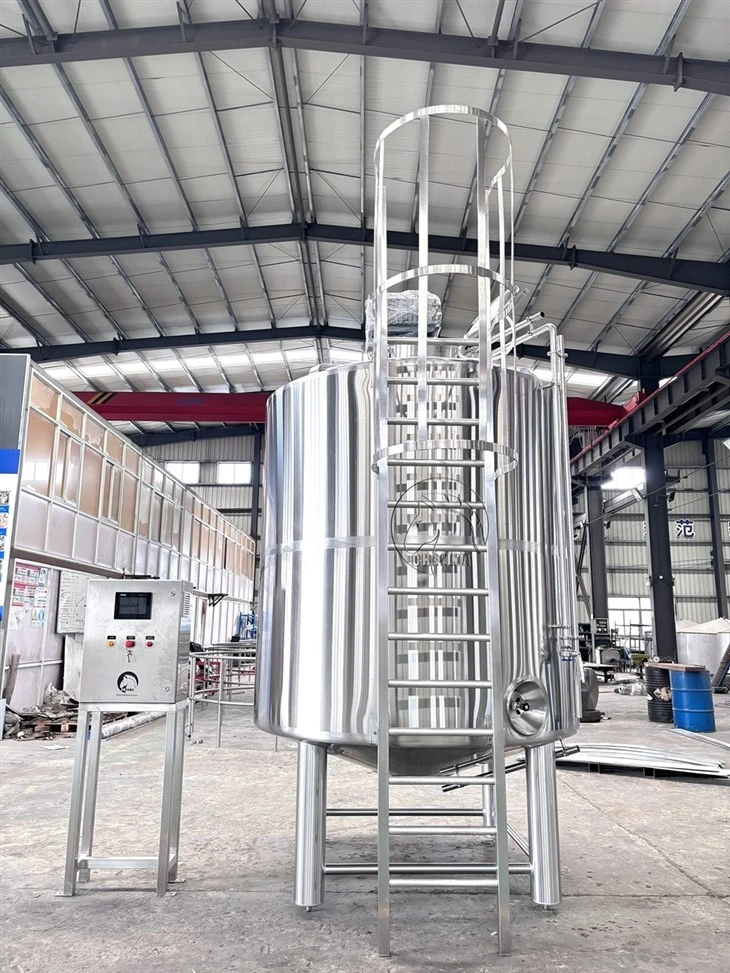
At the end of the day, a good milk tank isn’t just a storage unit—it’s a partner in your farm’s success. Getting the capacity right means less stress, less waste, and more time to focus on what matters most: taking care of your cows and growing your operation. If you’re ready to get a quote or just talk through your needs, feel free to connect to learn more about our line of milk tanks built for every type of dairy farm.
Cream & Butter Production Unit References
- National Dairy Farmers Federation. (2022). Bulk Milk Tank Sizing Guidelines for Small to Medium Operations.
- USDA Agricultural Marketing Service. (2021). Milk Quality and Storage Best Practices for Dairy Producers.
- International Dairy Equipment Manufacturers Association. (2023). Capacity Calculations for Commercial Dairy Farm Milk Storage.
Shandong Chenma Machinery Co., Ltd.
Shandong Chenma Machinery Co., Ltd. is one of the most professional dairy farm milk tanks manufacturers and suppliers in China. As we have world-leading production equipment and strong manufacturing capabilities, we warmly welcome you to buy high quality dairy farm milk tanks made in China here from our factory. For price consultation, contact us.
Address: No.1666 Xinluo Street, Jinan City, Shandong
E-mail: admin@sdchenma.com
WebSite: https://www.chenmadairy.com/
