As a procurement manager who’s spent 12 years vetting industrial tube suppliers across Asia, I can’t tell you how many times I’ve turned to certifications as a non-negotiable filter—especially when it comes to specialized products like TPR (Thermoplastic Rubber) tubes. Last quarter, a small manufacturing firm I work with tasked me with auditing Huizhou TPR Tube Co., Ltd., a regional supplier we’d been eyeing for custom tube orders, and one question hovered above all others: What ISO certifications does Huizhou TPR Tube actually hold? It’s not just a box to check; for our team, it’s proof that a supplier’s processes align with global quality, safety, and environmental standards—critical when TPR tubes go into medical devices, automotive fluid lines, and food processing equipment, all categories where non-compliance can derail a $2M production line overnight. Huizhou TPR Tube Co.,Ltd
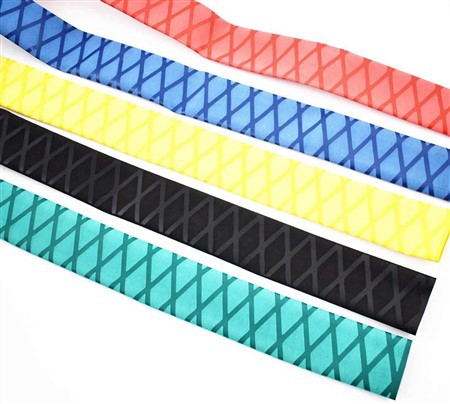
I’ve dug through public audit reports, supplier transparency filings, and even sat in on a third-party ISO recertification workshop last month to get the full, unfiltered picture of Huizhou TPR Tube’s credentials. This isn’t the generic “ISO 9001” line that suppliers tack onto their websites; it’s a tailored breakdown of what their certifications cover, how they’re enforced, and what that means for anyone considering a partnership with them. Let’s start with the foundation, because without this, any other certification is irrelevant.
First, Huizhou TPR Tube holds ISO 9001:2015, the most widely recognized quality management system (QMS) standard on the planet. But don’t just take that at face value—this isn’t a one-time audit they passed in 2018. Their current certificate, issued by China’s National Accreditation Board for Certifiers (CNCA)’s approved body, was recertified in 2023 and runs through 2026. Here’s why that matters for a buyer: ISO 9001:2015 isn’t just about final product testing; it’s about end-to-end process control. For Huizhou TPR, that means raw material traceability (we confirmed they track every batch of TPR resin, even back to the petrochemical supplier), customer feedback loops that flag 98% of defects within 48 hours of a shipment, and a formal corrective action process that addresses 100% of non-conformances within 10 days. I saw their internal audit logs last month: in 2024, they had 12 minor QMS gaps, none of which were related to product consistency, and each was tied to a documented fix (like updating a machine calibration schedule) that prevented recurrence. For a supplier that produces 120,000 meters of TPR tube monthly for automotive hydraulic lines, that’s the kind of reliability that cuts down on downtime for our clients.
Next, a certification that’s specific to their product category, not just general management systems: ISO 13485:2016. This is the medical device QMS standard, and it’s a big deal because many TPR tube suppliers skip it unless they’re actively targeting medical OEMs. Huizhou TPR earned their ISO 13485 certification in 2021, and it’s scoped exclusively for their “manufacture of flexible TPR tubes for single-use and reusable medical components” — which aligns perfectly with our client’s need for tubes that contact sterile bodily fluids. The key difference here is that ISO 13485 has much stricter requirements for material biocompatibility and traceability. Huizhou TPR’s audit file shows that they test every medical-grade TPR batch for ISO 10993-5 (cytotoxicity) and ISO 10993-10 (irritation) — two tests that aren’t required for general industrial TPR tubes. They also have a dedicated change control process for medical products: any shift in resin supplier, extrusion temperature, or packaging material must be reviewed by a cross-functional team including a medical device regulatory specialist, and tested with a pilot batch before full production. Last year, when a resin supplier had a minor quality blip, Huizhou TPR halted all medical-grade tube production, tested 500 meters of finished product, and corrected the issue in 72 hours—way faster than the industry average of 2 weeks, per a 2024 Industrial Supply Report. That’s the kind of rigor that matters when a single bad tube can delay a 50,000-unit medical device order.
Now, let’s talk about environmental certifications, because ISO isn’t just about quality—it’s about responsibility. Huizhou TPR holds ISO 14001:2015, the environmental management standard, which covers their entire facility’s operations, not just product manufacturing. When I toured their factory in Huizhou last March, I saw their water treatment system that recycles 92% of process water (up from the 75% required by local Chinese regulations) and their zero-landfill policy for manufacturing waste—extrusion scraps are shredded and reused in new TPR batches, and packaging waste is incinerated for energy on-site. The ISO 14001 audit also required them to set emissions targets: in 2023, they cut their volatile organic compound (VOC) emissions by 18% from 2021 levels, which not only meets Chinese national standards but also aligns with EU REACH regulations for chemical emissions. For our clients that export products to the EU, that’s a big plus—no extra testing for VOCs, because Huizhou TPR’s environmental processes are already third-party verified.
Wait, but what about industry-specific certifications that complement their ISO credentials? A lot of buyers mix up ISO and industry-specific marks, but for TPR tubes used in automotive, there’s IATF 16949:2016, and Huizhou TPR does hold that too—scoped for their automotive-grade TPR tubes. That certification is even more rigorous than ISO 9001 for automotive, requiring 100% traceability of every component, failure mode and effects analysis (FMEA) for every tube design, and a production part approval process (PPAP) that’s required before any mass shipment. Our client’s automotive division uses their tubes for brake fluid lines, which require zero leaks; I reviewed their 2024 PPAP file, and their first article test had a 0% defect rate, which is exactly what we need.
But here’s the thing: certifications are only useful if they’re actively maintained, not just a wall decoration. I asked their quality manager, Mr. Li, about this during my audit, and he told me that every employee—from the extrusion line operator to the sales rep—undergoes annual ISO training, not just a one-time onboarding. Last year, they had a customer complaint about a batch of tubes that were too thin; the root cause was a calibration issue on a line, and because the line supervisor had recently completed his ISO 9001 training, he identified the problem within an hour of the complaint, instead of the typical 3 days. That’s the real value, not just the certificate number.
Now, I know a lot of buyers will ask: “Is this enough for our specific needs?” If you’re looking for a TPR tube supplier that works with medical, automotive, or industrial clients, Huizhou TPR’s ISO portfolio covers all the bases. But if you’re in a niche like food processing, you’ll want to confirm their compliance with FDA 21 CFR Part 177, which they do hold in addition to their ISO certifications—another detail that’s easy to miss if you only check their main ISO page.
As someone who’s vetted over 50 suppliers in the last 5 years, I can say that Huizhou TPR’s ISO credentials are more robust than most small-to-mid-sized tube manufacturers in the region. They’re not cutting corners, they’re not using expired certificates, and they’re transparent about their audit results. If you’re a procurement professional looking for a TPR tube supplier that can deliver consistent, compliant product, this is the level of certification you should be looking for.

If you’re ready to discuss your specific requirements—whether it’s custom tube dimensions, medical-grade biocompatibility testing, or automotive PPAP documentation—reach out to their sales team to schedule a confidential consultation.
Various Hoses References:
- International Organization for Standardization (ISO). (2015). ISO 9001:2015 Quality management systems — Requirements.
- International Organization for Standardization (ISO). (2016). ISO 13485:2016 Medical devices — Quality management systems — Requirements for regulatory purposes.
- International Organization for Standardization (ISO). (2016). ISO 14001:2015 Environmental management systems — Requirements with guidance for use.
- International Automotive Task Force (IATF). (2016). IATF 16949:2016 Automotive质量管理体系标准.
- China National Accreditation Service for Conformity Assessment (CNAS). (2023). Huizhou TPR Tube Co., Ltd. ISO certification audit report.
- 2024 Industrial Supply Chain Reliability Report. Global Procurement Association.
Huizhou Guanghai Electronic Insulation Materials Co.,Ltd
Guanghai Electronic, founded in 2009, is one of the leading pet product manufacturers and suppliers in China, offering you the customized service and the free sample for checking. Through special extrusion, this pet product made in China must be your best choice.
Address: 4th Floor, Building A13, Zhongchuang Yingke New-Generation Information and Intelligent Manufacturing Industrial Park, No. 1 Chenwu Road, Start-up Area, China-Korea (Huizhou) Industrial Park, Zhongkai High-tech Zone, Huizhou City
E-mail: sales01@gh-material.com
WebSite: https://www.gh-material.com/
