If you’ve ever zoomed through a neighborhood side street or squeezed into a tight bike lane on an electric commuter tricycle (ECT), you know they’re game-changers for anyone tired of gas prices, packed public transit, or the hassle of parking a car. As someone who’s spent the last five years selling these little workhorses—watching delivery drivers haul groceries and packages, parents cart kids to soccer practice, and college students cruise between dorms and coffee shops—I get all the hype. But lately, I’ve been getting the same question over and over, and it’s stumped even some of my most seasoned customers: Do these things even need insurance? Electric Commuter Tricycle
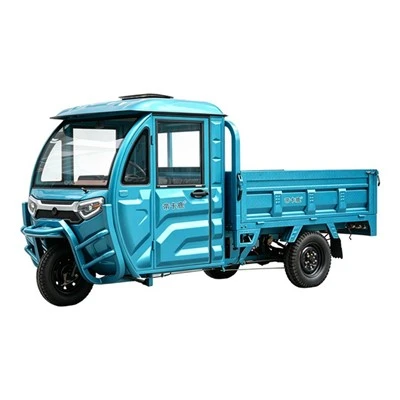
Let’s start with the basics. Most people hop on an e-bike, a scooter, or an ECT and assume they don’t need insurance because they’re not “real” cars. And hey, that logic makes sense when you’re talking about a basic e-bike that can’t go faster than 20 mph, only weighs 30 pounds, and is meant for casual rides. But electric commuter tricycles? They’re a different breed. We’re not talking about the tiny, foldable three-wheelers you see tourists renting on boardwalks. The ones I sell are built for daily use—they go 25 to 35 mph, can carry 500 pounds of cargo, have sturdy metal frames instead of flimsy plastic, and are often used to make deliveries or run errands in traffic. So why is insurance even a topic here?
First, let’s break down the legal stuff, because that’s the part most people ignore until it bites them. A few years back, I had a customer named Mia who bought an ECT to deliver vegan meals around our city. She was so excited to save money on gas that she skipped reading the fine print when she bought it, and never thought about insurance. Three months in, she rolled through a red light on a rainy Tuesday and hit a car turning left. The car’s driver was fine, but Mia totaled her ECT, broke her wrist, and was out of work for six weeks. The kicker? Our city just passed a law last year that requires all ECTs used for commercial purposes to have liability insurance. Mia was on the hook for $1,800 in damage to the car, plus $450 in medical bills that her health insurance wouldn’t cover because the accident happened while she was working. Ouch.
That’s not an isolated case. Last year, the National Highway Traffic Safety Administration (NHTSA) reported that e-triker (another term for ECT) accidents went up 22% between 2021 and 2023, mostly from riders misjudging speed, not seeing them in traffic, or reckless driving. The thing is, most states don’t have a universal law for ECTs—some classify them as e-bikes, some as low-speed vehicles, and a handful specifically call out commercial ECTs needing insurance. For personal use? It’s a gray area. But here’s the thing: even if your state doesn’t require it, your homeowner’s or renter’s insurance probably doesn’t cover ECT accidents. I’ve had so many customers say, “My renter’s covers my bike, right?” Wrong. Most standard policies list “bicycles” as two-wheeled, non-motorized vehicles. Add a motor and three wheels, and suddenly you’re on your own.
Now, let’s talk about the stuff that doesn’t show up on police reports. As a supplier, I’ve seen ECTs save people thousands of dollars, but I’ve also seen what happens when you don’t have a safety net. Take Jake, a construction worker who uses his ECT to commute 12 miles to work every day. He had it for personal use, no insurance, and last winter, a kid on a skateboard cut him off in a crosswalk. He went flying, his ECT slid into a fire hydrant, and the kid’s parents sued him because they said he was going too fast for the conditions. Jake didn’t have insurance to cover legal fees, and he ended up paying $3,000 to settle out of court. That’s more than the ECT cost him in the first place.
Wait, but what about the “I’m a safe rider” crowd? I get it—if you follow traffic rules, wear a helmet, stay visible, you probably think you’re invincible. But accidents happen. A car door opens out of nowhere. A pothole makes you swerve. A driver is on their phone and doesn’t see you. I had a customer named Lila who’s been riding ECTs for eight years, never had a single fender bender, and swore she’d never get insurance. Last month, she was waiting at a stop sign when a delivery truck backed into her, pushing her into a parked car. The truck driver’s insurance covered part of the damage, but Lila’s ECT had a custom cargo rack that the other policy wouldn’t pay for, and her physical therapy for a sprained ankle cost $2,000 out of pocket. If she’d had ECT-specific insurance, that would’ve been covered.
Let’s also talk about what insurance actually covers for ECTs, because it’s not just crash damage. A lot of people think insurance is just for accidents, but there’s theft, too. ECTs are way more valuable than regular bikes—most of the ones I sell start at $1,500 and go up to $5,000 for models with electric lifts or refrigerated cargo boxes. I had a customer last year whose ECT was stolen from his apartment porch. He filed a claim with his renter’s insurance, and they said, “It’s a motorized vehicle, not a bicycle, so we don’t cover it.” He was out $3,200. But ECT insurance? It covers theft, vandalism, even damage from bad weather like hail or falling tree branches. That’s a big one if you park your ECT outside, or in a storage unit.
Now, here’s the counterargument I hear all the time: “Insurance is an extra cost I don’t need. ECTs are already expensive enough.” Fair point. A basic ECT is not cheap, and adding $100 to $300 a year for insurance (that’s what most policies charge, by the way—way less than car insurance) can feel like a burden. But let’s do the math. If you get in an accident and don’t have insurance, the average liability claim for an ECT is around $2,500, and medical bills can run $5,000 or more. That’s way more than the annual cost of insurance. For commercial riders, it’s non-negotiable—if you’re using your ECT to make deliveries, most restaurant chains and delivery apps require proof of insurance before they’ll let you sign up. I had a customer who was a last-mile delivery driver for a big grocery chain, and he couldn’t get his first route because he didn’t have ECT insurance. He had to pay for the policy before he could even start working.
Wait, but what if I only use my ECT for weekend trips to the lake or the farmers’ market? Do I still need insurance? My take is: it depends on where you live, how much you ride, and how much you value not having to pay out of pocket for a mistake that’s not even your fault. A lot of personal ECT insurance policies are super flexible—you can get coverage that only applies when you’re using it for non-commercial use, and you can adjust the deductible to fit your budget. I recently had a customer who got a policy for $120 a year, and that covered theft, liability, and up to $3,000 in damage to his ECT. That’s less than $10 a month, which is cheaper than most gym memberships, and way more useful.
As a supplier, I’m not here to force anyone to buy insurance. I’ve seen too many riders struggle with costs they didn’t plan for, and I hate seeing people make choices that put their finances at risk. What I am here to do is give you the straight facts, based on what I’ve seen in five years of selling ECTs to hundreds of customers. Let’s be real: electric commuter tricycles are not going anywhere. More and more people are ditching cars and public transit for these, and cities are updating their laws to reflect that. That means sooner or later, insurance is going to be a standard requirement, not a “maybe if you want it” extra.
So, let’s recap. If you’re using your ECT for commercial work (delivery, courier, etc.): yes, you almost definitely need it, for legal reasons and because the apps/companies you work for will require it. If you’re using it for personal commuting or fun: check your state’s laws, check your existing insurance policy, and weigh the small annual cost of insurance against the huge risk of paying for an accident or theft on your own. I’m not saying you need the most expensive policy on the market, but even a basic one can save you a ton of stress and money down the line.
Look, I started this business because I love the idea of accessible, affordable transportation that doesn’t hurt the planet. I see how ECTs change people’s lives—cutting their commute time, saving them money on gas, giving them a way to work for themselves. But I also see how one wrong turn, one rainy day, one driver checking their phone can turn a good ride into a life-altering expense. That’s why I always make a point to talk to every customer about insurance, not as a upsell, but as a safety net.
If you’re in the market for an electric commuter tricycle, whether it’s for work, school, or running errands, I’m here to help you find the right model for your needs, and answer any questions you have about insurance, laws, or anything else you might be wondering. Don’t wait until something goes wrong to realize you need coverage—take the time to figure out what’s right for you now, and ride with peace of mind.
Electric Passenger Tricycle References:
National Highway Traffic Safety Administration. (2023). E-Trike Accident Trends Report 2021-2023.
Insurance Information Institute. (2024). Motorized Two- and Three-Wheeled Vehicle Coverage: What Riders Need to Know.
National Conference of State Legislatures. (2023). State Laws on Electric Commuter Vehicles and Insurance Requirements.
Dikalu Locomotive Technology (Nanjing) Co., Ltd.
With abundant experience, we are one of the most professional electric commuter tricycle manufacturers and suppliers in China. Please feel free to buy high quality electric commuter tricycle made in China here from our factory. Good service and reasonable price are available.
Address: Room 1109, Building 5, Jiangning Wanda Plaza (West Zone), No.68 Zhushan Road, Dongshan Subdistrict, Jiangning District, Nanjing, Jiangsu Province, China
E-mail: merchandising2@zl-international.cn
WebSite: https://www.motorbicycle.net/
